Leadership….is not a dirty word

There are two leadership quotes that I particularly love.

Lao Tzu: A leader is best when people barely know he exists, not so good when people obey and acclaim him, worse when they despise him….But of a good leader who talks little when his work is done, his aim fulfilled, they will say, “We did it ourselves.

Napoleon Bonaparte: A leader is a dealer in hope.

Leadership is not demanding, commanding, directing, or driving.  It is not managing or administration.

We have an oversupply of ‘leaders’ (whether political or otherwise) who lead by being negative, by pointing out the problems in our world, the dangers we face, what we should “not” be doing.

The kind of leadership that is most effective, and that is most lacking in our world today (and if we’re honest, in our church as well) is the kind of leadership that deals in hope, that inspires initiative and energy.  A truly effective leader is one who paints a picture of an alternate reality, who reveals to us what we ‘could’ be, and motivates us to go where we might not go if left to our own devices.

That’s the kind of leadership I would love to see us nurture in the Uniting Church in Tasmania.

What does it mean for you to deal in hope?  Who can you encourage or inspire? What new possibilities can you imagine….and call into existence?

(this story first published in Uniting Tas – the monthly newsletter of the Uniting Church in Tasmania)

Knowing the ending

I read a book last week.  It happens occasionally.

It wasn’t the latest literary classic, or a leadership text. It wasn’t even theology.

It was, how shall we put this, airport fiction. Clive Cussler.  Adventures. Craziness. Action.

I like reading Cussler’s stories when I’m after a bit of escapism.  They are non stop adventure romps. This particular book featured a husband and wife treasure hunting team who lurched from adventure to adventure, taking on and single handedly defeating the bad guys, finding the treasure and saving the world.

All good.  Right?

Somewhere along the way, I found myself getting annoyed at the book.  I was frustrated at the predictability of it all. No matter what the odds, no matter what the obstacles, the hero couple always prevailed, always found the hidden clue no-one else could see, saw off trained commandos with a piece of rusty steel and some basic physics…..and so on…..endlessly.

Now I knew full well what I was getting into when I opened the book. Cussler books definitely follow a fairly standard format, so I wasn’t surprised.

But still, I was annoyed.

Where was the reality?  The obstacles that sometimes are insurmountable? The good guys that sometimes can’t defeat the bad guys?  I found myself just wanting a little more rawness, a little more “real-ness” in the story.

And somewhere along the way I got to thinking a bit about church worship services (no, I don’t know why my mind makes these strange leaps either).  I got to thinking about how so often our church services follow predictable plotlines, where the good guys always triumph, where we are always able to “praise God”.

Sometimes in church, as in Cussler, I wish for a little more rawness, a little more real-ness.    Sometimes we should spend a little more time crying out to God about the awfulness, and a little less pretending we’re full of praise and worship.

Sometimes life just sucks, and church is one place we shouldn’t be afraid to name that reality.

Even if Cussler doesn’t.

workshop description: re-imagining worship in a traditional space

The Uniting Church in Tasmania is blessed with many fine old church buildings.  They’re traditionally shaped, and often furnished accordingly. Long fixed pews, pipe organs, even old-school box pews are common. Heritage listing prohibits re-shaping many of the buildings to a form more appropriate for a modern faith community.

Those buildings are both a blessing, and a profound challenge to the church – in ways that we’ll continue to explore.

Last week we had the opportunity to run the latest in our regular “Hobart 2020 Forums” for those interested in exploring the themes of “How then shall we live?”, the interim report of the Uniting Alive: Hobart 2020 process.

Continue reading

betting the grocery money

Tasmania has a population of around 500 000 people.  It’s a relatively small place.

Staggeringly, so far in 2010, we have collectively lost over $100 million on poker machines.  $100 million.  That’s $200 for every single man, woman and child.   Something like 120000 of the population are children, so that bumps the per adult loss up to the vicinity of $260 each.  There are obviously a lot of families who don’t gamble at all…..so the picture for those who do, and those who are ‘problem’ gamblers with serious addictions just keeps getting worse and worse.

Those stats are the tip of a horror story. It’s nothing less than frightening that as a state we’ve lost $100 million from family budgets to poker machines in just six months. That’s not including losses at gaming tables, betting on horse racing or other sporting or community events.

How many families are on the edge because of gambling addiction? How much crime is gambling related? How many relationships are damaged or destroyed?

I’m declaring myself not to be a wowser. I don’t mind the odd raffle ticket to support a community initiative, or maybe an office Melbourne Cup sweep, but how far do we let our collective addiction to gambling go?

Right now you can bet on anything you like.  Julia Gillard for PM? You’ll currently win $1.52 for every $1 you bet.  Meanwhile David Wirrpanda is at $26 for a $1 bet to win Dancing with the Stars.  Daily news and sports reports will let you know the odds for your football, basketball, cricket or european handball team.  Every day. Time after time.  Encouraging you to lose your money, your family, your groceries. I can only imagine how much the internet gambling companies pay our commercial news providers to include that information in impartial news bulletins.

We’ve invited gambling into our lounge rooms – not just via the internet, but on the evening news.

If I’m frank, I’m appalled by it.

But the pokies still seem to be the big issue, at least here in Tasmania.  Everywhere poker machines are installed, gambling revenue goes up.  In lower socio-economic areas the pokie losses are higher that other places.

And the state government? They earn almost $90 000 000 each year from gambling taxes. Think they’ll do much about it? Wanna bet?

What does it say about us as a community? A society?

I don’t know about you, but I’ll be letting my community leaders know that I’m very concerned about the costs of gaming machines and gambling for our families, our communities, our state.

the australia i want to believe in

An open letter to Australia’s political leaders….

I want to take this opportunity, on the eve of an election, to tell you – the political leaders of this nation – about the country that I want to be a part of.  And I want to tell you about the kinds of political leaders that I want leading us into our future. Continue reading

one small crack in the elbow

So it’s “le tour” time. That time of year when my sleep patterns are destroyed by SBS coverage of .

It’s truly one of the world’s great sporting epics, and I’m years into my annual addiction to it.  If you missed last year’s reflections, here’s some stories you might find interesting:

This year’s tour has been unbelievable – and we’re not yet half-way into the race. Massive accidents, favourites falling by the wayside, the inclusion of seriously tough cobblestone stretches and plenty more.

But last night’s stage took the cake. After already covering 145 km and topping three big mountains, the pack hit the foot hills of a monster 27.5 km climb (gaining over 1600 vertical metres) up the famed Col de la Madeleine.  With the front running teams pouring on the power up front, the peleton split apart, with race leader and Australian Cadel Evans one of the biggest casualties – dropping out of the battling pack and destined to lose so much time that any hope of winning this year’s Tour was gone.

Later it emerged that Evans was carrying an injury – a fractured bone in his elbow suffered in a crash two days earlier (the day he took the race lead).  While seemingly a relatively minor injury, the cracked bone hit Evans where it hurt the most – stopping him from being able to stand up out of the saddle and power up the mighty Madeleine. Continue reading

leadership by opinion

I’m not one to buy into political debate.
Really, I’m not.

But I’m increasingly concerned about what we’re seeing in federal politics in Australia at the moment.  It appears to me, that leadership and policy-making are increasingly being shaped by opinion polls, and by doing ‘whatever it takes’ to remain in power by pandering to voters.

Perhaps its naive of me to think it, but I’d far rather have leaders who lead from their convictions, from well thought out and argued basis, than by figuring out what’s the most popular opinion to hold.

Where are the leaders who will cast their vision on asylum seekers, mining taxes, or climate change, and then convince us to follow them?    Consultation is one thing, but sometimes the ‘majority of voters’ are wrong and need to be told they (we) are wrong.

At least part (and perhaps a big part) of the issue is that today leadership is executed by ‘sound bite’.  Very few Australians get to hear or see extended presentations from those who would lead us.  Most of us catch 30 seconds on the news at night, a paragraph or two on a commercial news website (with its own axe to grind) or the distilled opinions of others in our facebook or twitter feeds.

That’s no way to engage with those who would lead our nation. But that’s all most of us are prepared to give.

Is it any wonder that our leaders lead based on the sound bites they get back, when that’s all we ‘re prepared to hear from them?

With our increasingly self-centred existence, and inability to enter in genuine dialogue on all sorts of topics, perhaps it’s no surprise our leaders have given up trying to lead us when we plainly won’t follow (that’s a topic perhaps for another day).

Maybe we’re getting exactly the kind of leadership we deserve.

PS: I know, just one or two sweeping generalisations in this post. But still, I’ll stand by my opinion. Unless I take a poll and discover its unpopular.

workshop description: create-a-cafe

Last week we ran the first of a series of “Hobart 2020 Cafe Forum” gatherings.  Designed to provide opportunity for people to explore the themes of the report “How then shall we live?” for the Uniting Church in Hobart, we tried to take a creative approach to this gathering.

The key themes of the report that formed the basis for this gathering are collaboration, creativity, innovation, imagination and community.

This post records the shape of the event, some of the thinking behind it, and a simple recording of what happened. If it’s an idea that has use for you, please feel free to run your own create-a-cafe gathering….either along similar lines to what happened in Hobart, or better still, shaped to fit your own context.

Hit the link to read all the details:

Continue reading

hammering home hospitality

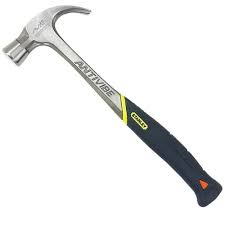
When all you have is a hammer, everything looks like a nail……or so the saying goes.

For those churches who follow the lectionary (a set cycle of bible readings around which church services are based), this week there is a story of Jesus’ encounter with a woman who washes Jesus feet with her tears, dries them with her hair, then cracks open an expensive alabaster jar of perfume to finish the job. All this happens in the middle of dinner….at which Jesus is a guest, and the woman an uninvited gate crasher.  Read it here.

I was chatting briefly about the passage with a colleague this morning, and she pointed out what were, to her, the important features of the story.

Meanwhile, I’ve been thinking a bit about hospitality lately, as I’m working with a group of people to host a training/reflection weekend on that theme.  So with hospitality in my mind for other reasons, I read this story looking for, and finding lots of expressions of hospitality.

When you have a hammer, you see nails.  And that’s the beauty of good stories (and the bible has more than a few good stories). Good stories speak at many levels, offering insights into many different situations, and allowing many different ways of interacting with them.

As I think about this story through the lense of hospitality, I’m drawn to ask the question, who offers who hospitality in this story?

Jesus is invited for dinner, but not particularly cared for by the host.  The cultural practice of offering water for foot washing for instance……is not extended.

The woman is not invited, but comes anyway and offers generous hospitality to Jesus.

Jesus in turn, seeing that the host is not happy about this intrusion, or Jesus welcoming of the visitor, extends welcome and honour to the uninvited guest in a must unexpected way.

What does it mean to offer hospitality in our culture today?  Or for that matter what does it mean to accept?  Surely it’s more than bringing a bottle of wine to dinner….or offering to do the dishes (an offer which must by convention be politely refused).

And who are the outsiders in our day? The uninvited? Who is not welcome at the table?  How can we make the outsider welcome…even if we are guest rather than host?

These are the kinds of questions this story evokes for me.  But I have to say, I’m wondering, what do you see in it? What kind of hammer are you holding?

familiarity breeds immunity

Recently I visited one of our UCA congregations in Hobart to run a workshop with the congregation after their Sunday morning service.

As I also had the opportunity to introduce myself during the service, and to speak briefly on the topic of the workshop, I thought I’d take some time before I made the journey south to reflect on the bible reading they would be using in church that day – to see if there were any connections between the reading, and my workshop.

It’s this story, from the gospel according to Luke. Hit the link and go read it. See what you think.  Even if you’ve stumbled upon these musings and you’re not religious at all, take a moment to read it. Go on. I’ll wait here until you get back….. 😉

As I read the story I found myself nodding along with it. “Yep, ok, Jesus and his followers, see a funeral, Jesus feels sorry, brings the guy back to life, goes on his way.  Typical Jesus story.  No big deal.”

Wait. What?

No big deal? Continue reading