on noticing

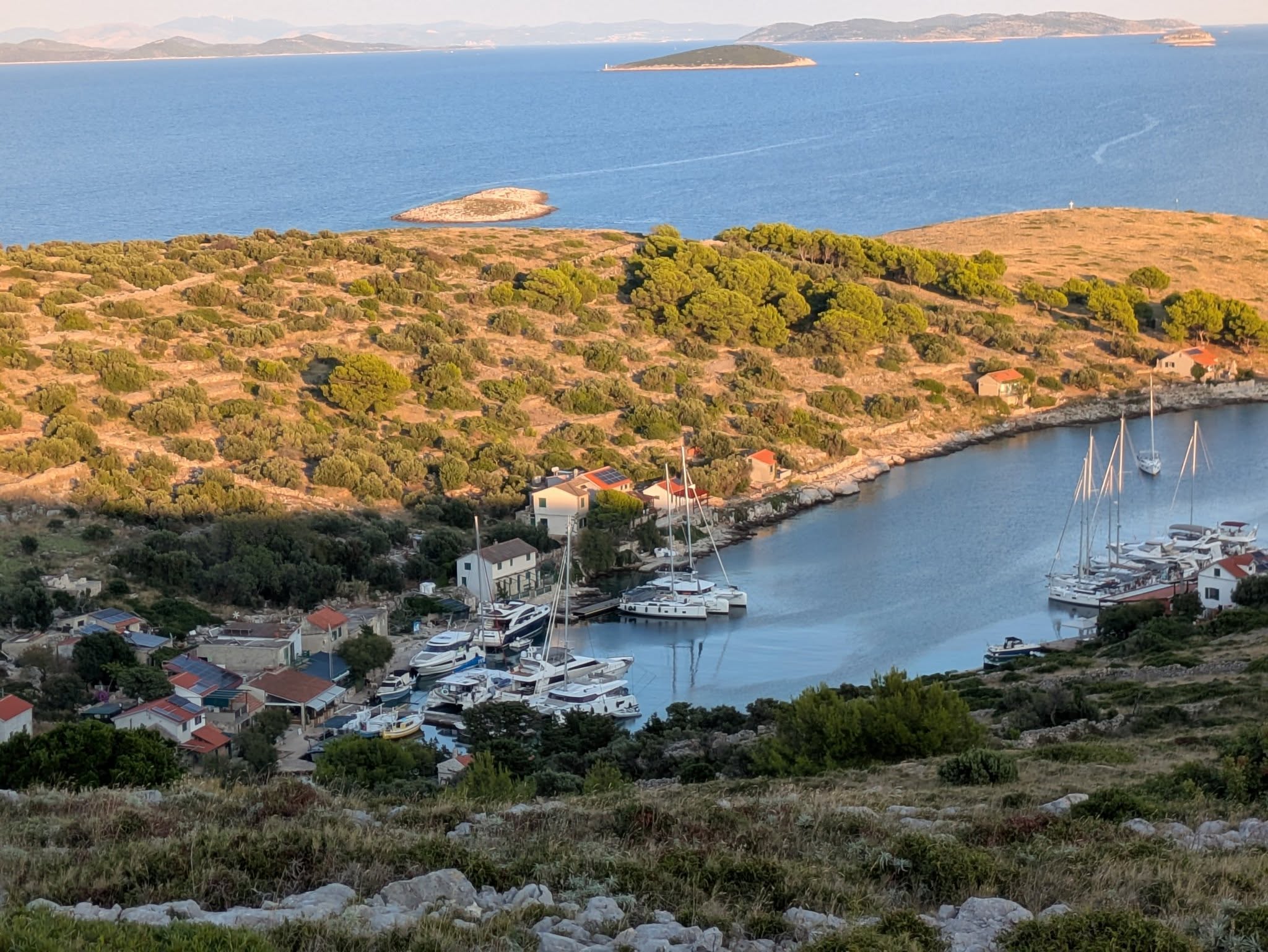
We sat on the stone dock in the tiny village on the Croatian island of Smokica this morning, watching the world pass slowly by. The water here is crystal clear, astonishingly so, and after a while we started to notice some of the sealife.

The Adriatic, it turns out, is not quite the same as Australia’s Great Barrier Reef. When you swim or snorkel on the Reef, the waters are teeming with life. At times it feels like you’re swimming in an aquarium, so full is the sea. Colour, and shape, and size is everywhere, literally in your face at times.

Here’s it’s different. At first glance the waters seem empty, the sea devoid of life. Of course that’s not the story – there is life, but you have to watch, waiting patiently for it to reveal itself.

As we sat on the dock this morning, that’s exactly what happened. First the smallest of all, swimming about near the surface, a loosely connected school of tiny fish hunting about for any floating morsels of food. So small as to be barely noticeable, but then once you see them, they’re everywhere.

Then something the size of a finger cruises through, maybe a European Anchovy. And then something larger still, the darkly coloured Black Seabream, sitting slightly deeper. As we sit, more and more and more life reveals itself. The Usata or Saddled Seabream is perhaps most common, a distinctive black band on its tail.

Further out something bigger stirs, unseen by us, but evident as a school of small baitfish suddenly burst from the surface and flee for their lives.

Closer in, what might be a tiny Couch’s Goby darts furtively around the rocks, hiding, exploring, feeding, passing a vibrant purple starfish and a black sea urchin.

And then a beautiful fish, solo, striped with vertical blue bands, moving so slowly and carefully through the rocks on the sea floor, it makes the Goby seem positively adventurous. Its name, to me at least, remains unknown.

The longer we sit, the more we see. The more we look deliberately, the more we notice.

After 20, 30 minutes of sitting, paying attention, noticing, it seems the Adriatic is also full of life, just a little patience and willingness to wait and watch is required. It was all we could do to tear ourselves away from the show.

I’m reminded how true all this might be in other parts of my life too. The more we wait, the more we look, the more we see, the more we notice.

Here’s to noticing.
is island life real life?

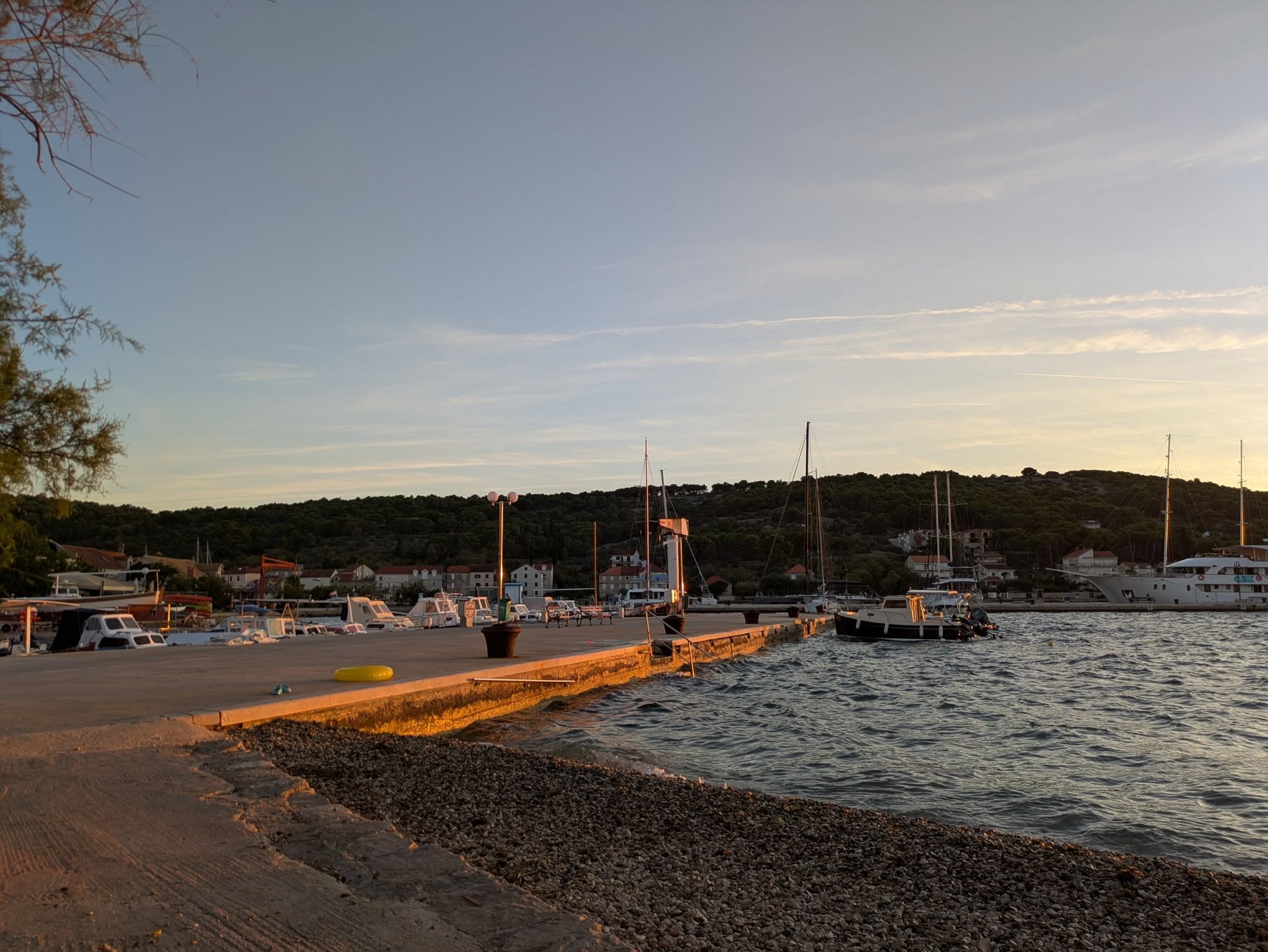
It’s exactly how you’d imagine a small island in the Adriatic sea to be. The houses are crafted from stone – either built a long time ago, or built recently, but made to look old. The dock opens to the sea, and on this day that’s the direction the wind is coming from and so the boats, small and large, bob and tug at their mooring ropes. In the late afternoon sun, a ferry swings in, dropping off those who live on the island but have been elsewhere for the day, and perhaps a smattering who are arriving for a short stay at the end of the summer.

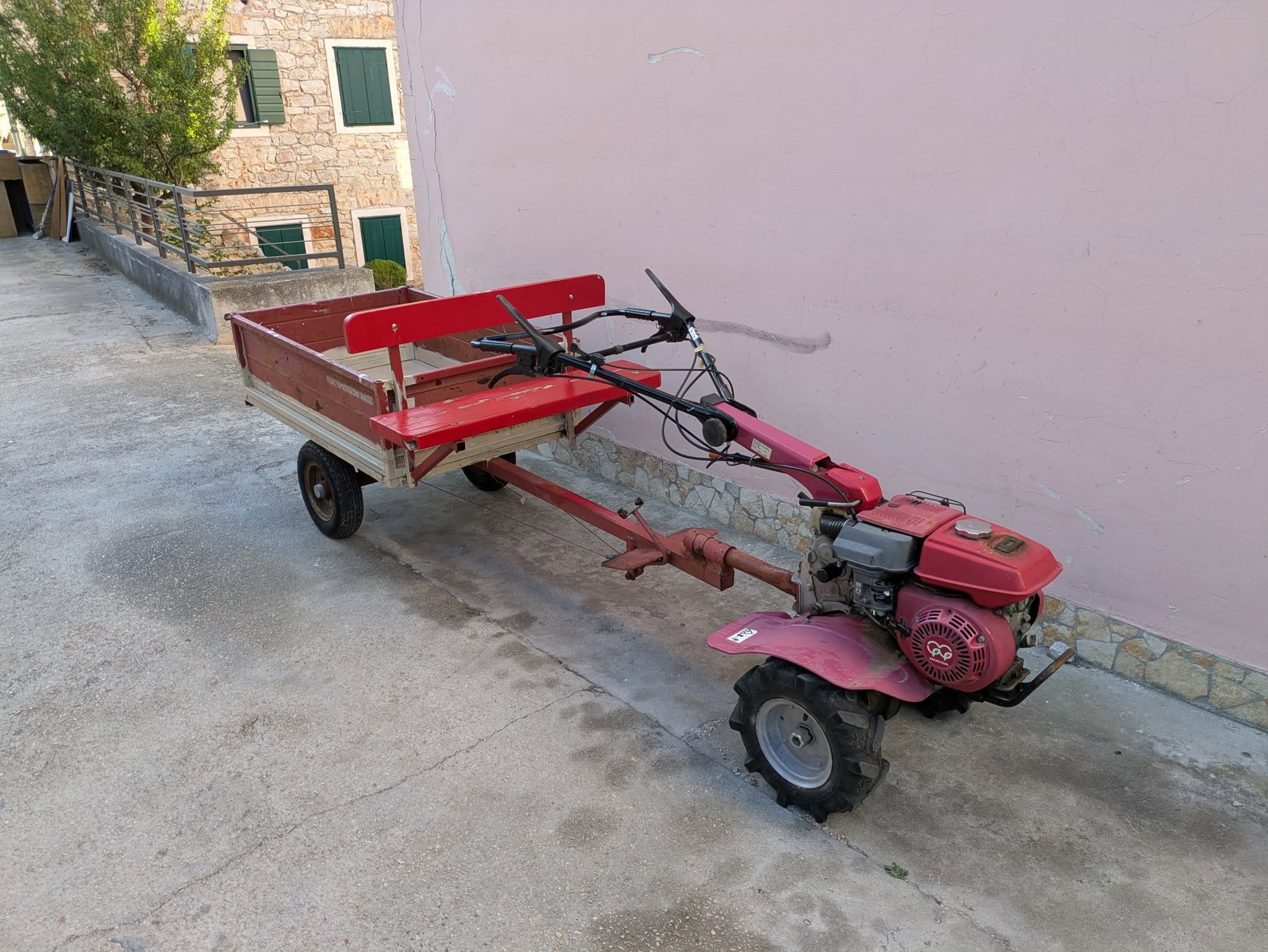
It’s small, so there are no cars, just bikes and the occasional golf cart, and a local contraption that looks for all the world like a box trailer being drawn by a lawn mower. The church bell rings out, as it must do every day here.

Just along the waterfront some government department somewhere has paid for a modern exercise park to be installed, and it sits, unused, quietly rusting away – looking so out of place it’s almost comical. The old men of the island, meanwhile gather to play bocce, and laugh and chatter. One older woman parks her bike, climbs down a ladder into the sea to swim as the sun sets. It looks as if she does this every day of her life. She probably does.

Kids swim and play and fish, while adult-sized people roll by on adult-sized tricycles, a few groceries from the general store the prize for a late afternoon outing. There’s a chest of pool and swim toys sitting by the water’s edge, free for anyone to use (and obviously much more heavily used than the exercise park).

It’s golden hour, the sun setting behind distant islands, and life seems just about as idyllic as you can possibly imagine. We sit on a bench by the water, nibbling on some pre-dinner snacks and reading the books we’ve carried from the other side of the world. Nobody pays any attention, we are just two visitors passing through.

Life here on the Croatian island of Zlarin seems so simple as to be just about perfect. Not for the first time these last few days I find myself thinking about all the ways we overcomplicate our lives. Surely it actually doesn’t need much more than a late afternoon swim, a game of bocce with friends, and a simple house in a beautiful place? Soon enough we will get back on our boat, and in the morning we will sail away to another place, and then in a couple of days fly back home to Australia.

I know I’m not the first to wonder about bringing home the simplicity I see in other places and other people, and trying to practice it in my place, with my people. That’s what I’m thinking about on Zlarin Island as the sun sets and a cool breeze blows.

every place has a story, some of them are dark

Two days ago we walked the walls and streets of the old city of Dubrovnik, Croatia. It is positively humming with life, with every accent on the planet, good food, beautifully restored buildings, and stands as a proud testamant to the people of Croatia and all of its history. It is a beautiful old city. But, it bears the scars. Walls are pock-marked with bullet and shrapnel damage from the 1990’s war that the city was engulfed in, and maps show the extent of damage done during those days. The same city walls that were blasted from a seaborne assault now carry tourists, and cafes and bars. It’s a fascinating juxtaposition.

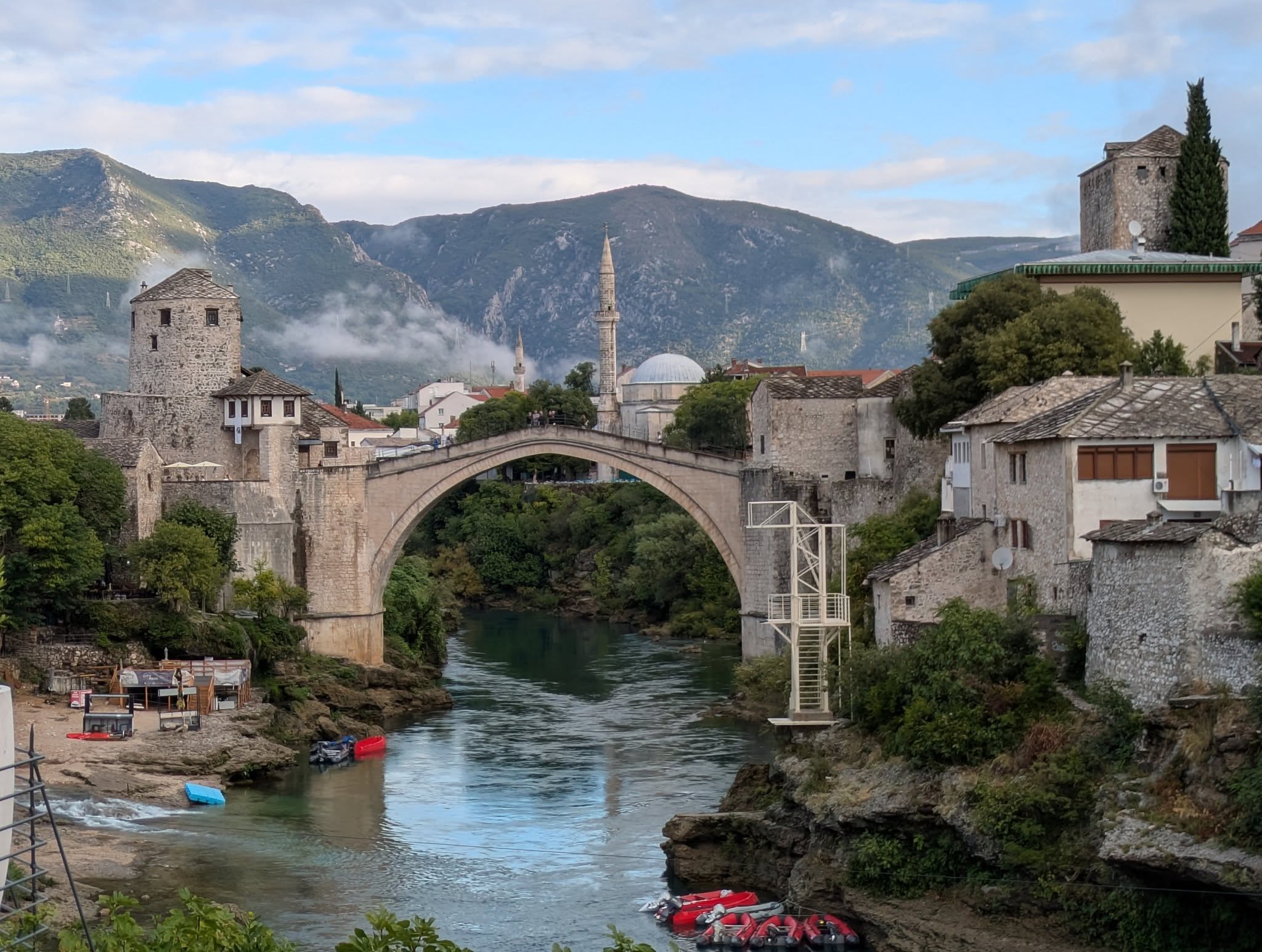
And then yesterday we visited the city of Mostar, in neighbouring Bosnia-Herzegovina. This city too, brims with life and energy, built along the banks of the beautiful Neretva River that flows through its centre (with a little more force today after fierce storms lashed the region overnight). We walked with a local guide visiting street art in the city, along the way encountering the damage still evident here from that same war – where opposing forces faced off across the river, hurling destruction at one another. Where Dubrovnik’s old city has been largely rebuilt, here that’s not yet always the case – streets and buildings stand as mere shells, bearing witness to the horrors that happened here in the 90’s. Beautiful street art calls the city to new life, right across the street from crumbling hulks that 30+ years on tell a story.

I’m not sure what to make of it all. The challenge of unpacking centuries of human cultural conflict? The ability of people all over the world to be violent and cruel in pursuit of power, or money, or ideology? Or the determination that means no matter what, we always find a way to emerge, and to pursue life and love and happiness?

The conflicts that engulf this region are still in living memory. One person we spoke to told us her mother was pregnant during the war. Another who escaped with their parents to Norway, only to return years later. These are real people who lived through things we barely understand.

I don’t have a nicely bound conclusion here, just the recognition that every place has a story, and a history. Some of it is cruel, and violent and shocking. And some tells of determination, and possibility and peace. Those themes are true all over the world, it seems. I pray to be part of the latter, not the former.

Turns out being a tourist is not only about beautiful views, good food, and fun times.

thankfulness and a vanilla slice

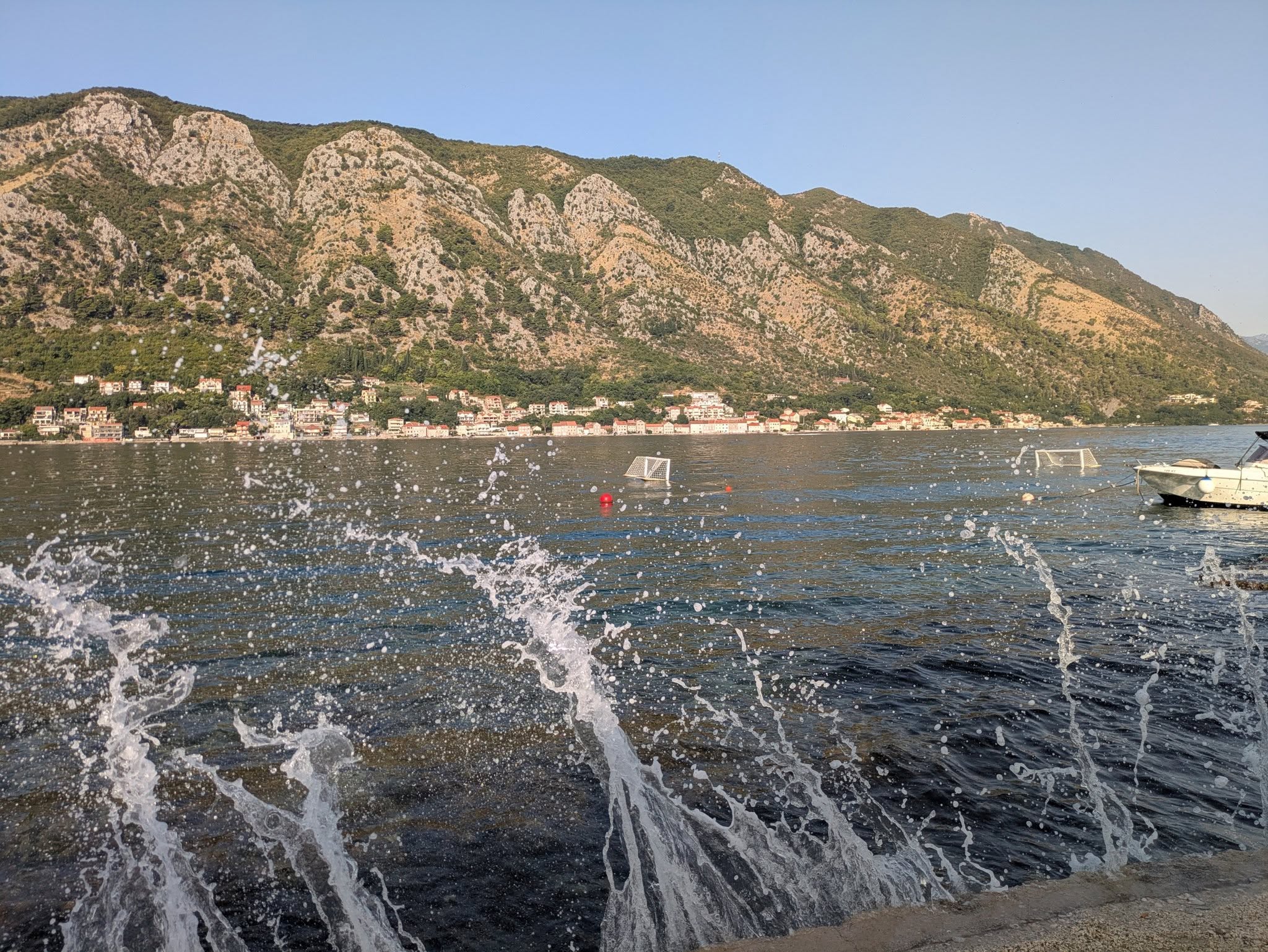
On a picture postcard morning, we sat by the bay at Kotor, Montenegro (I know, as you do). It was our last morning in this beautiful country, and I found myself trying to soak up every last bit of the view. Every last stone church dating back centuries, every last glimpse of the old town walls built by the Venetians 500 years or more ago, every boat full of tourists (like us) cruising past, and every last sight of the stunning mountains plunging almost straight into the sea.

And as I sat, enjoying a Krempita (a Montenegrin vanilla slice), I found myself profoundly thankful. Thankful for this astonishing world we live in, with all its beauty and wonder and variety. Thankful that in our own life we have the means occassionally to travel to such marvellous places. Thankful for all the stories that intersect in a place like this – where people come from near and far to enjoy its beauty. And thankful for the reasons we are here – marking 30 years of marriage and family with an adventure together, and sharing part of the trip with good friends. No life is perfect, but ours has been pretty good so far, and I was, in that moment, truly thankful.

Perhaps, I also thought, I’m not always thankful enough. Perhaps, I wonder, I could express that sense of thankfulness more often, more overtly – to Sheri, to our kids, to our wider network of family and friends.

Thankfulness (or gratitude) it occurred to me, is both something that can catch you by surprise, as it did for me this morning – or something you can practice, and cultivate. I’m sure there’s some research somewhere about that.

Anyway, as I enjoyed my breakfast by the sea, I was, and remain thankful, for many things.

when God comes calling…

Every now and then I preach at my local church, Toowong Uniting, in Brisbane. This story comes from one recent example. Before you read the message, checking out the bible reading I’m reflecting on will help. It’s 1 Samuel 3.

Good morning! I feel like it’s been so long since I shared with you on a Sunday morning that I should re-introduce myself! I’m Scott, and with my family – some of whom are in the worship team this morning – we’ve been part of the community here for about 11 years. For a long time, I’ve worked with the Uniting Church across Queensland and earlier in Tasmania, helping congregations and leadership teams reflect on mission, discipleship and strategy. It’s lovely to share with you this morning.

It’s quite the story, this one of Samuel and Eli. It is, in a very real sense, the story of Samuel’s call. But it’s also Eli’s story. And of course, it’s God’s story – God comes calling, so to speak. Before we dig into what we’ve just heard from Warwick, let’s set a little bit of the scene – spell out some context so to speak.
Eli is the priest, he’s one of the main characters in the story. They only barely get a mention here, but he has two sons who serve in the tabernacle at Shiloh along with him – and we’ll get to them in a minute.

The book of Samuel actually opens with the story of Hannah. She’s married to a bloke called Elkanah, and as was the way in those days, there’s another wife Peninnah. Penninah, we hear, has born children, but Hannah hasn’t. There is jealousy and rivalry at play in the household – even though Elkanah clearly loves Hannah. She feels the sting of not having children – for her, that’s important – and is constantly praying that God would bless her with a child. So powerful is this urge, so determined is she that he promises that if she’s blessed with a child she will dedicate that child to the Lord’s service.

Continue reading

never meet your heroes?

It’s said, isn’t it, that it’s dangerous to meet your heroes. Heroes can be people that we build up in our minds, put on a pedestal, hold in such high regard that when we do finally meet, any flaws can be devastating. And of course there are flaws, we’re all only human.

The saying, it seems, is about people.  People are our heroes.

Continue reading

on sliding doors and finding balance…

It happened, as many near disasters do, in an instant.

One moment I enjoying a great ride on my bike, enjoying the thrill of blasting down a mountain bike trail in the forest, minding my own business and soaking up the adrenaline. The sun was shining, the temperature about perfect for a morning on a mountain bike. Everything was as it should be in my world.

And then a wallaby shot out of the bushes in front of me.

In an instant the human brain did what I find utterly astonishing…without so much as a conscious thought I knew without shadow of doubt that I would hit that wallaby. It’s speed and trajectory, and my own would intersect perfectly a handful of metres in front of me. It would be injured, and I would crash and find myself tumbling down the track protected only by a lyrca t-shirt and plastic skid-lid. All this registered in a split second as my painful future bounded toward me and I raced toward it.

I almost fancy that we made eye contact, the wallaby and I, and we each knew that what was about to happen would be costly for both of us.

Continue reading

the sound of mountain bike tyres

Recently I took my own advice on being open to life-long learning, and set out to learn something.

Specifically I decided that after years of riding mountain bikes, I should learn some proper technique when it comes to jumping. I can get down most trails, and have fun doing so, but jumps are something else. I like staying in contact with the ground, rubber firmly in contact with dirt, as it where. But at one of the places I ride there is a new trail littered with jumps, and while I can safely roll through them, it struck me that it would be more fun if I knew how to jump.

So I found myself on the trail with Peter, a friend and on this occasion mountain bike coach. We covered lots of technique, body position, movements, bike mechanics and so on, before I started repeatedly rolling through a series of turns and into the first jump on the trail. Continue reading

on rock bands and puppy dogs and phd’s…

I didn’t see this coming. At 50 years of age I find myself suddenly hanging out in pubs and clubs and live music venues around Brisbane. I’ve even been seen in the Valley after midnight. Truth is I didn’t even do these things when I was 18, so to be there at 50…it’s all a bit strange.

The reason, of course, is one of my children. He’s in a band and as a dutiful dad, I’m there to transport him and encourage him and his band-mates.Yes, at times, to be a roadie-dad. We hang out up the back with the other parents, shoot a little video, enjoy watching the band perform and the 20-somethings in the crowd dance and sing and love life like there is no tomorrow.

The band, well, they’re something else. A bunch of 18 and 19 year olds that combine genuine musical talent, ambition, unbridled joy with a huge dose of irony and irreverence. They’ve named their five-piece band the Rutherford Jazz Trio. There are five of them, none are named Rutherford, and they don’t (usually) play jazz. Go figure.

Forming at high school a couple of years ago, their initial experiences involved things like private parties, open-stage street festivals and a season of 6-hour busking sessions on Saturday mornings at the Rocklea Markets. Now that they’re all 18+ they’re playing pubs and live music venues across Brisbane and entering the live-music scene, earning their chops.

Of course we, the parents, are following along. Ridiculously proud. Busting out embarrassing dance moves. Wondering where it will all end up.

Continue reading

bending to the breath of God

Before we dive in, a word of explanation: what follows is a brief reflection on the Christian season of pentecost. If this word or idea is new to you, read first the biblical account in Acts 2 and/or watch this quick explainer from Chuck Knows Church

I lay in bed on Monday night. It had been a busy few days. I was tired. I always feel tired. Still, sleep eluded me.

As I lay there I heard a sound that’s become so familiar to us in Brisbane this year that I have to say I’m sick of it: the sound of rain drops falling on the tree outside my bedroom window.  At first a gentle patter, then growing louder as the drops themselves became heavier. That oh-too-familiar sound.

There was something different this time though. It wasn’t only the sound of rain I could hear, but a new sound. An insistent sound. A sound coming from the distance, but getting closer and closer.

Continue reading