intersection

I notice you in my rear view mirror

as we wait for the lights to turn green

you wear a look of anxiety,

or tiredness,

or frustration

its hard to tell in a mirror

for those moments as our lives intersect

I wonder about your story

was it a tough day at the office?

heading home to a fractured relationship?

maybe worried about sick children?

or the everyday challenge of paying the bills

our lives meet this day

and though you perhaps are not aware of it

for a moment I think of you

worry with you

wonder about you

then the light turns

and our stories diverge

no junk mail

In our society (Australian mainstream society at least) there is increasingly a tendency to cultural conflict, to stronger and stronger statements, to more open, public and violent rhetoric.

We can see it in our treatment of governments right across the country. Any government, any flavour. There are ever shorter honeymoon periods after a government comes to power in a big election win, and then the downward spiral begins.  Soon enough it’s “the worst government ever” and the next election sees and entirely predictable change. And the cycle continues.

We can see it in the prevalence of bigotry, narrow-mindedness and bullying that infects our society (and sadly some of our churches).

We see it in public debate – for example the marriage discussion, environment & carbon reduction, asylum seekers.

The public discourse is vitriolic, violent.

The willingness to be teachable, to be open to the experiences or views of others almost non-existent.

There are those who would point to the internet, and it’s inherent capacity to make every person an author, commentator, journalist as the root cause.

I’m increasingly coming to wonder about the roles, and the long-term implications of two other aspects of our society.

The first is advertising.  There is now a couple of generations of adults whose lives have been soaked 24/7 in advertising since the moment of their birth.  Don’t get me wrong, advertising has been around a long time – but not in anything like it’s present form. Our lounge rooms, roads, workplaces, telephones, televisions, radios deliver advertising directly and immediately to us, almost non stop.

And the main message of advertising? It boils down to “you should be dissatisfied with what you have”.  Whoever you are, wherever you live, whatever you drive, however you clean your clothes, you should be unhappy. You are not good enough. And if you buy “product X” you will be whole, or buy “product Y” and you will demonstrate you actually do love your kids/partner/dog/goldfish.

If we spent 20, 30, 40 years constantly being told “who you are isn’t good enough” do you think at some point we might come to believe it?

The cult of celebrity is only a slight variation on the same issue. There is a constant parade of people who only differ from you and I in that they can very effectively pretend to be someone else (isn’t that what acting is?), sing, or kick a ball/jump into a sandpit/run fast (choose your own sporting equivalent here) but are nonetheless presented to us as a role model, an identity to be aspired to, a voice to be listened to. The underlying message seems to me (intended or not) to be simple: “who you are isn’t good enough.”

The second issue, is our increasing addiction to media in the form of news, current affairs, and opinion.  News media thrives on an ever increasing rate of acceleration. The news cycle is shorter and shorter, the sound-bite more important than the reasoned opinion, and the need for conflict central to news and ratings.  Media seeks controversy and reports it.  Media generates controversy and reports on it. And when the controversy, the conflict dies? We move on to the next hot spot. Media fills our houses, our telephones, our laptops, our television screens…and our minds….with controversy and conflict.

Now there are two things to say here.

The first is that we get what we want.  We choose to watch television/read magazines/surf the net and we choose the content that we allow into our lounge rooms (that’s not so true about the signs plastered all over our roads/railway stations/sporting fields).  We reinforce the two issues above by our own actions every day.

When we stuck a “no junk mail” sticker on our letterbox at home, I grieved for my lost encounter with advertising.  I was actually sad that I didn’t get to read the latest Target/Myer/Kathmandu/Bob Jane T-Marts catalogue telling me how unsatisfactory my life is without their product.

When I choose my viewing/reading/surfing habits based on stories of conflict, when I drop my “opinion” into the voracious maw of a public comment section on my favourite website, when I buy into the adulation of celebrity……I get what I ask for.

The second is that we know (or ought to) there there is another way.  We proclaim a God who is love. A God who created us (however you understand that phrase), loves us, values us. A God who wants to say 24/7 “who you are IS enough, IS satisfactory, IS good.”

I don’t think there are simple answers, but for me at least it starts with wondering if we are growing a problem of our own making. And I need to think more about the influence of non-stop advertising and conflict-driven media in my own life, and those of my children.

I’m not advocating a “drop-out” approach, whereby we move to a shack in the mountains and cut ourselves off (mmmm….tempting!), but a need to intelligent, thoughtful and deliberate engagement in our culture.

And the willingness to sometimes say no.

No junk mail.

(And no, the irony that I’m posting a story offering strong opinion about opinionated media isn’t lost on me!)

campout….museum style?

IMAG1962Last weekend the 8 year-old and I toddled off for a father-son campout.

It wasn’t the usual beach, river, country or mountain style camping spot – we headed straight for Launceston’s Queen Victoria Museum and Art Gallery.

Picking up the idea from the 2006 movie “A Night at the Museum”, the QVMAG threw open their doors to kids and parents to come in and sleep-over, and discover just what happens overnight in Museums.

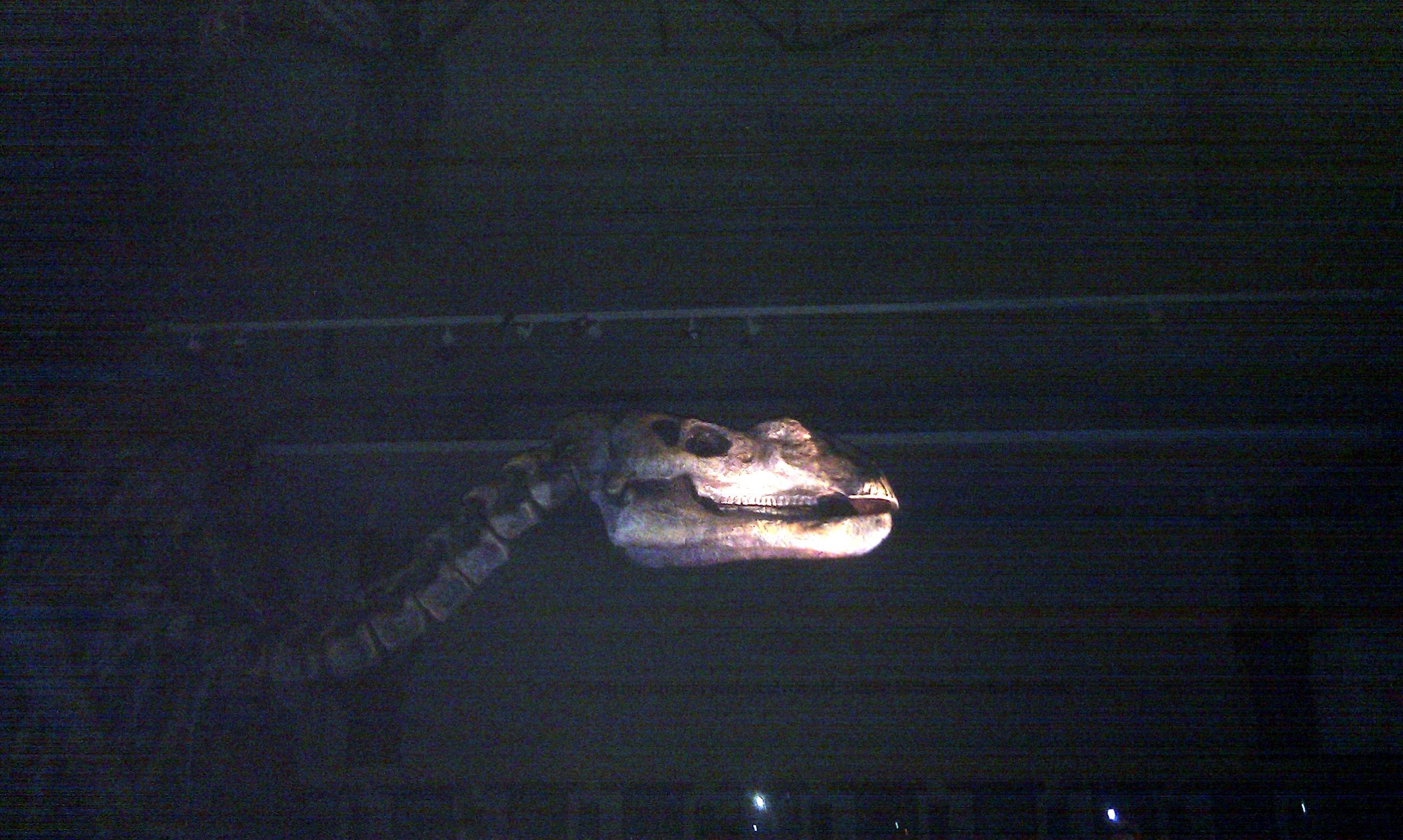
We kicked around the hands-on science exhibits, took in a preview of the upcoming Little Big Shots short film festival, sat spellbound in the planetarium touring the galaxy, took a torch-light tour through the dinosaur hall (turns out T-Rex is pretty spooky when its dark!) and finished off with bedtime stories in QVMAG’s Hooked on Books exhibit.

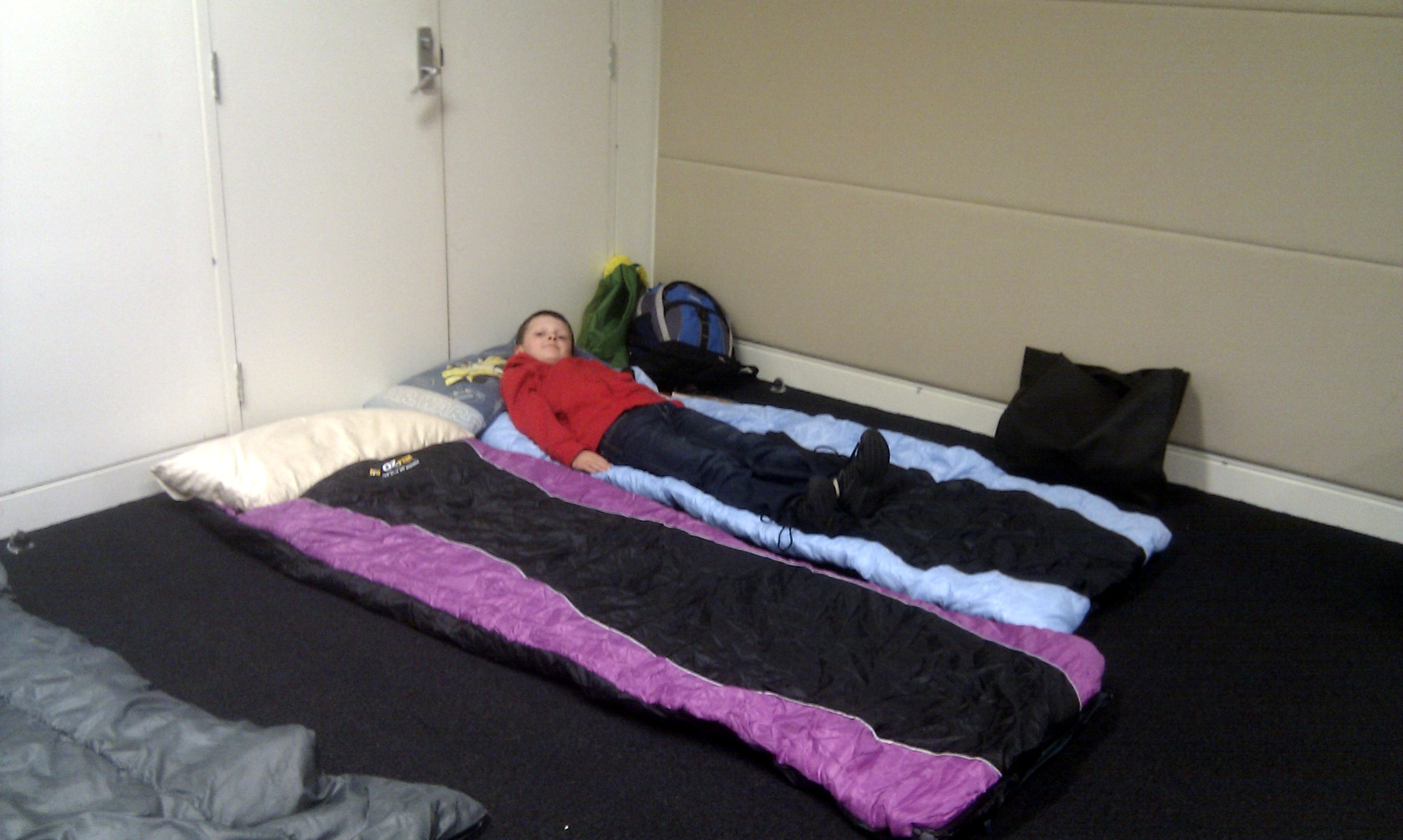
IMAG1959And then we (all 40 of us) retired to our temporary digs in the museum’s conference room to snore the night away. It was quite a cacophony!

Naturally we were up early the next morning for more exploring and a great pancake breakky cooked by the Museum’s director.

For a dad and boy, it was a fun night out, a real adventure that won’t be quickly forgotten. And plenty of other mums, dads, sons and daughters would back me up on that one.

There were two things about QVMAG’s Night at the Museum that I reckon are worth noting.

First is that it’s a creative way to use a facility that might seem like it’s a one-use kind of place.  Nobody designed the building for camp-outs and sleep-overs. With a little imagination and re-use of the space, the QVMAG staff made it work beautifully.

And second, the event happened because one person pushed and pushed.  Our host was the director of educational services, but the idea, the energy, the inspiration came from one of her junior staff members.

It took one person to have one idea, and then a bunch of imagination and hard work to make it happen.

Who is the “one person” in your community?

What is the “one idea”?

How can you back them with imagination and hard work?

QVMAG’s Night at the Museum was a great night, and I hope it runs again. I have a feeling the other two junior members of the family will want to join in for a night of adventure and exploration; a night of imagination fueled fun.

One person, one idea.

bumps in the road

I spend a bit of time travelling in my job, sometimes within Tasmania, and sometimes beyond.

One of my regular trips takes me down to Hobart, and whenever the opportunity is there I like to take the road less travelled. The delightfully named “Mud Walls Road” takes a left somewhere down past Oatlands and leads through the Coal Valley into Richmond.

Maybe I like the road because it twists and turns and is an enjoyable drive.

Maybe because the scenery is interesting.

Maybe because the Richmond Bakery is in that direction.

I can’t confirm or deny.

But the road itself is rough. Particularly the top end is long, long overdue for serious work, is filled with potholes, bumps and ruts that keep your attention and have resulted in a lower speed limit to improve driver safety.

It’s filled with the kinds of bumps you see coming (mostly). Mostly they’re avoidable, or at least you can brace yourself for the impact or slow down to minimise the consequences.

And cars have clever suspension, with springs and shock absorbers designed to absorb the worse of the vagaries of the Mud Walls Road without passing on the damage to the vehicle or its occupants.

Bumps we can see are like that.

Last night I was on another regular trip, the 8.40pm VB flight from Melbourne to Launceston. We were coming up out of Melbourne airport, the crew were preparing the food trolley for the very quick service offered on this short flight. I think I was on the edge of sleep after a long day.

All of sudden it was like the plane hit a jagged pothole, dropped and bounced.

There were little gasps all around, a few nervous jokes about bumps in the night as hands reached to tighten seatbelts.

The crew locked away the trolley, sat down and harnessed in.

And we bounced and rocked away the night until somewhere out over Bass Strait when things settled down.

This was the kind of bump we don’t see coming.

The kind that catches us unawares, bounces us out of a state of stillness, unsettles us because it’s beyond our control.

And the kind that leaves us a little nervous about what else might come next, what other bumps that we can’t see might be lurking out there.

Life is like that isn’t it? Sometimes in church, sometimes in family, sometimes at work. Sometimes on a plane.

We have to deal with the bumps we can see, and the ones we can’t.

And what can we do about it?

Aircraft are designed to cope with turbulence like this. Wings made of steel have an astonishing capacity to flex and twist, absorbing the gusts and hammer-blows of unseen turbulence and protecting their occupants from an even worse shake/rattle/roll scenario.

Like a car has suspension, like an aircraft can flex and twist, like a sea-going vessel is designed to cut through rough water, so we ought to find ways to build flexibility, resilience and suspension into our community, family or personal life.

Habits of prayer, of reflection, of hospitality and community that form bonds that are strong, but flexible.

Ways of being in relationship with one another that enable us to deal with bumps in the road (whether we see them coming or not) without getting all shaken and stirred.

What are your springs? Your keel? Your flexible wings? How do you cope with the bumps?

the grey

there are days when the grey comes rolling in

like the fog, seeping through on a winter morning

bringing cold

bringing damp

dulling the light that used to shine

what is this grey? from whence does it come?

and more importantly, can I make it go?

the grey that replaces joy with dull

that steals motivation and momentum

that leaves discontent and sadness in its wake

is it real, this grey?

or is it a feeble excuse?

do I find the grey and lose the colour just because

that’s what I’m looking for?

i don’t like this grey

but it won’t go away.

LEGO church: for real!

A while back I pondered what it might be like if your church was made of LEGO.

Now somebody has really done it.  The life-sized LEGO style church called Abondantus Gigantus has been put up in the Netherlands for a festival. It’s not quite what I was thinking, but it’s fantastic nontheless.

Imagine how many 8 year old boys would be in this church? ;)

Hit this link to see lots of great photos (including inside, in action) or watch the video (I hope your Dutch language skills are up to the task!) for the story of how it came to be.

Brilliant.


anatomy of team

Over the summer, there’s been a music video that has gone “viral”, racking up well over 40 million youtube views in just four weeks, and collecting imitations, live performances on US television shows and more.

It’s five people (a Canadian band called Walk off the Earth) playing a cover version of Gotye’s “Somebody that I used to Know”.  And yep, they’re all playing on the one guitar. If you haven’t seen it, take a look:

Now I’m no musician, so I don’t know technically how hard it is to do what Walk off the Earth have done, but I find it impressive, compelling even.

And as I watch, I can’t help but admire the teamwork that’s going on in this clip.  Read on for a few lessons on teamwork from Walk off the Earth.

Everybody plays a part. Everybody in a team has a part to play. Understand your part, how it contributes to the whole and be confident that your part matters. And value the part that each team member plays.

All parts are important, but not all are equal. In a teamwork environment, there are different parts, different roles to play. Each is critical. Whether you’re providing the lead vocal or the backup harmony, banging out the chords or adding the little highlights that give depth, the part you play is important.  If you don’t bring your part to the table, the result will be less. Don’t underestimate your role, or that of each of your team members (even the less obvious ones).

Teamwork can be close. When you’re working in a team environment, it means working closely with the people around you (sometimes physically, as in the video). It’s critically important to do what you need to so that there is  space for each other to get the job done.  Sometimes that means being a little cramped, or out of your personally preferred position of way of being.  But it’s a team thing, not a solo performance. Walk off the Earth describe the production of this clip as hot, sweaty and smelly.  Teamwork sometimes puts us in uncomfortable places.

Not everybody is active all the time. In any teamwork there are times when the emphasis moves from one person to another, when the critical task passes along the team. Sometimes you’ll be flat out, with the whole team waiting on you, and sometimes the pressure will ease off while another takes the lead.  You’re still part of the team, your presence and commitment are necessary.

You have to trust your team mates. Teams dont’ function without trust. Trusting your partners to do their job, giving them the space (and respect) so that they can, leaning on them for the support you need.  Could we go so far as to say that mutual trust is the most important ingedient in successful team?

Imagination rules. Imagination is so central to much of what lies before us – no matter your field of endeavour.  It’s true in teamwork as well.  Imagination lets us find and explore new ways of working together; combining skills in ways that nobody has ever thought of before; reaching new and unexpected outcomes.  Imagination matters, so let yours run riot.

Teamwork takes practice. Working effectively doesn’t always come naturally, easily or quickly. Sometimes it takes determined effort. Walk off the Earth have worked together for 6 years before producing this song, spent 14 hours and 26 takes to get right and describe the experience as at times being frustrating.

A long time ago, a wise man named Paul wrote something a little bit similar about the nature of team and community.

The body is a unit, though it is made up of many parts; and though all its parts are many, they form one body…

Now the body is not made up of one part but of many. If the foot should say, “because I am not a hand, I don not belong to the body,” it would not for that reason cease to be part of the body. And if the ear should say, “Because I am not an eye, I do not belong to the body,” it would not for that reason cease to be part of the body. If the whole body where an eye, where would the sense of hearing be? If the whole body were an ear, where would the sense of smell be? But in fact God has arranged the parts in the body, every one of them, just as God wanted them to be. If they were all one part, where would the body be? As it is, there are many parts, but one body.

The eye cannot say to the hand, “I don’t need you!” And the head cannot say to the feet, “I don’t need you!” On the contrary, those parts of the body that seem to be weaker are indispensable, and the parts that we think are less honourable we treat with special honour. And the parts that are unpresentable are treated with special modesty, while our presentable parts need no special treatment. But God has combined the members of the body and has given greater honour to the parts that lacked it, so that there should be no division in the body, but that its parts should have equal concern for each other. If one part suffers, every part suffers with it; if one part is honoured, every part rejoices with it.

Now you are the body of Christ, and each one of you is a part of it.  (1 Cor 12:12-27)

Whether you’re thinking about a church community (or team) as you read this, or a professional situation, a sporting team or a family, there’s something here for us to think about.

If you’re leading a team, how do you help your team members get to grips with what it means to be good together?

What else do you know about teamwork?  What else can you spot in this clip to teach others? Leave a comment and share it with us all….

what do we knead?

15 years ago, or so, I got right into eating freshly baked bread.

I loved the smell, the taste, and the convenience of baking bread whenever.

We baked white bread, multi-grain, fruit bread, all sorts.  It was, I have to say, fantastic. A time in life that I really enjoyed.

And then our bread making machine broke down.

That’s right, the machine.  I was an expert in the use of the bread-maker. Load up the ingredients, set the timer, go to bed. Wake up the next morning to a magically baked fresh loaf for breakfast.

All I had to do was insert the ingredients in the right amounts (or better yet use a pre-mix that I got from someone else), press the buttons in the right order…and “fresh bread” was on the way.

Without the machine? No chance.

Until just the last month or so.

I’m not sure why, but I woke up one morning with the overwhelming urge to bake bread. Really make it, mix it, knead it, rise it, punch it down, rise it again, bake it, tear it apart and smother it with butter and jam.  The whole nine yards.

So the kids and I started, rustled up a recipe and set about turning our once-tidy kitchen into a bread-making disaster zone.  Each Saturday morning (if we’re at home) we get to work, churning out something different for morning tea or lunch while Sheri watches on, patiently offering much-needed tips and I’m sure bemused by my latest mid-life mini-crisis.

It turns out actually baking bread is hard work.  But it also turns out that I love it.

I love the fact that with subtle changes to the mixture, or the time spent kneading or rising, the result is different.

I love the fact that the dough changes completely as you knead – becoming elastic, flexible and responsive as you work it longer, and longer.

I love putting it in a warm place, letting the yeast go to work and watching the dough rise to double it’s size. I even like that it has to be protected, kept safe in the rising phase.

I love (actually, the 7 year old son loves) punching it down, kneading again, resting and rising again.

And I love the waiting time in between each stage, waiting, watching, chatting, anticipating.

And the smell that wafts from the kitchen as the oven works its own magic on the dough….and then the taste…..oh my!

Turns out I still love baking bread, but even more as I work at it myself compared to letting the machine take over for me.

I have to confess, my bread is nothing special, no earth shattering flavours, no award winning recipe. But there is something about making it myself.  And it seems to me, that I’m learning some lessons about church and mission as well.

As a church nearly obsessed with good order, with structure and institution, we’re good at the “bread machine” version of dealing with the changing world in which we live. We’ll import the right program, line up the ingredients, press go and know it will all work out ok.  Much as I enjoy the “messy church” approach, it’s an example of that same thing (and I’m not picking on messy church, it’s just an example).

Get the program, get the ingredients, press the buttons, wait for the bread.

The challenge is for us to learn to bake our own bread. To think about all the different elements that go into it. Mixing it carefully and patiently, watching the mix change and become flexible, elastic, responsive, letting it rise in a warm place, with the right catalysts at work, reworking it when required. And most of all being patient and gentle.

And anticipating the smell, when that fresh loaf comes out of the oven, not quite sure what we’ll find inside, but enjoying it nontheless.

What would it look like if we, in the church, baked our own bread?

boot camp….good for the soul

Dumb things we do.

At the moment I’m in just over half-way through a four week “boot camp”.  A bunch of us gather in the local park, basketball court or swimming pool three times a week at some ridiculous hour of the morning (honest, I didn’t even know there was a 6 “AM”) to be cajoled, motivated and threatened in the nicest possible way by our two boot camp physical trainers.

The goal is to be a little fitter, and a little trimmer – and do exercise with a group, in community as it were. I’ve never been great at being motivated to solo exercise (running? only if I’m late for dinner), so it’s been great to be with a group to stay encouraged and committed.

Each session is just a little different. Pilates, running, jumping, aerobics, aqua-aerobics, boxing, core-strength circuits and so on. Each day we gather, do a different type of exercise, working on different muscle groups, and keeping the variety and interest levels high.

And each day I go home tired, sore and happy.

Boot camp for me is a kick start, an intense four week experience to help change my eating and exercising habits. I can imagine doing it every year or so, to just help keep my motivation for good health high. For others it’s a regular thing – every month or every few months.

And as I sweat and groan and whinge my way through the morning’s workout, I get to wondering….just as boot camp is good for my body (and probably my mind), I wonder what a boot camp designed to be good for my spirit would be like?

Imagine gathering three times weekly over a four week period to work through a whole range of spiritual “exercises”.  Imagine walking the labyrinth, praying taize style, contemplative meditation, lectio divinia and so on.

For some it would be an occasional thing, the opportunity to give my spiritual life a little nudge along, to try some different forms of spiritual nourishment. For others maybe a little more frequent.

I just camp help wondering what it would look like….boot camp for the spirit.

Just as long as there are no push-ups.

birth and death

Last week I shared some time with my colleagues here who work for the Uniting Church in the Presbytery of Tasmania.

It was partly a retreat day, partly a planning day, and partly a day of building our sense of team.

It was a day in which all sorts of interesting possibilities came alive for us, as we thought, wondered and planned how to challenge, support and nurture the church here.

As we closed the day, Carol read to us, from Romans 8:18-25, and some commentary from Macrina Wiederkehr (Seasons of Your Heart) that contained a poem.  In the poem, Wiederkehr describes what must have been her own difficult birth – a birth story in which she apparently nearly didn’t make it, being momentarily pronounced dead.

I’m sure the scripture, the commentary and most of the poem were very interesting, but I confess I stopped listening. I was captured then and since by one line in the middle of the poem.

The doctor placed me aside and announced the sad news of my death, right in the middle of my birth.

Let’s just re-read that again.

The doctor placed me aside and announced the sad news of my death, right in the middle of my birth.

That’s got to be about as difficult as it gets. Right in the moment of new birth, new hope, new beginnings, is death.  Just as things where about to get interesting….it was all over.

I kind of wonder if that’s about where those of us who belong to the Christian church find ourselves right now.  And for the Uniting Church in Tassie it rings true.

There are well documented challenges facing the church. Buildings. Money. Age. Numbers. Ministers.  Well documented.

It would be easy to pronounce death. Many have (me included).

But increasingly, I get the feeling that we’re not actually in the middle of our death….but strangely, bizarrely, in the middle of our birth.

Not because we’re about to have some explosion of numbers and reclaim the glory days of the past, but because it seems to me that we’re on the edge of discovering anew what it really means to be communities of faith, what it really means to follow Jesus in this time and place.

Somehow, we find ourselves on the edge of a time of new hope.

All over Tasmania, wherever I go, I am encountering stories in the Uniting Church of people trying new things, re-thinking what it means to live together in faith community, worship together, engage in community, participate in God’s mission.

I hear the hope in a Friday night praise and worship gathering in the rural village of Wilmot. I hear it in a lounge-room gathering in Evandale. I hear it in a wild and powerful vision of residential community in Kingston. I hear it in the quiet contemplation of a new garden at Scots Memorial. I hear it in the burgeoning community meals at Wesley. I hear it in the dreams of a first-ever website for the congregations in Hobart’s north. I hear it in the endless stories of community service that are emerging from Uniting Care Tasmania. I hear it in the stories of a cape york visit by students from Scotch Oakburn.

I hear hope everywhere.

Not fanciful, unrealistic hope.

Not hope that ignores the realities of 2011.

But simple hope.  Hope that right in the middle of what we thought was our death, we might just find the possibility (and yes, pain) of birth.

That’s kind of exciting.