
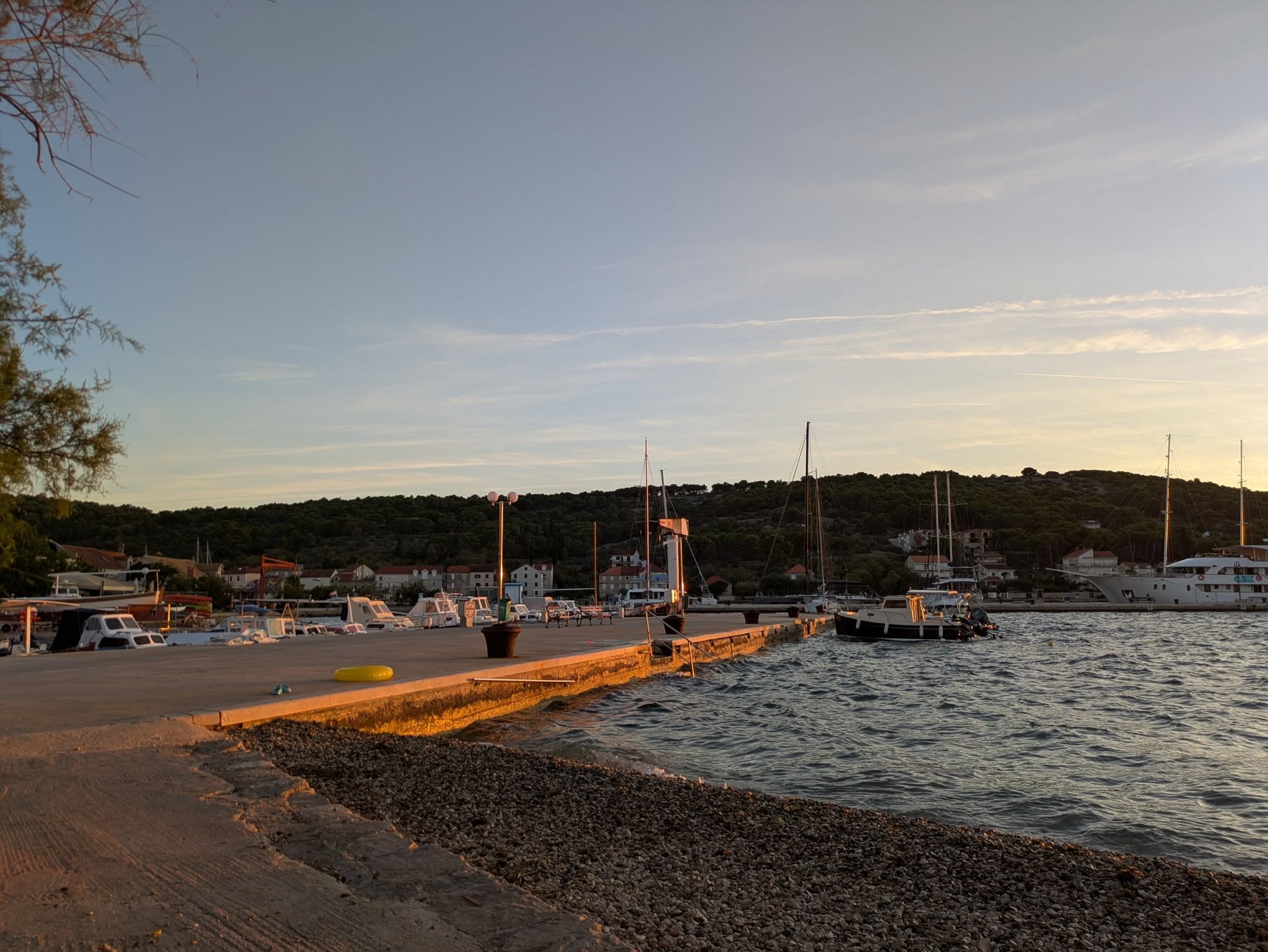
It’s exactly how you’d imagine a small island in the Adriatic sea to be. The houses are crafted from stone – either built a long time ago, or built recently, but made to look old. The dock opens to the sea, and on this day that’s the direction the wind is coming from and so the boats, small and large, bob and tug at their mooring ropes. In the late afternoon sun, a ferry swings in, dropping off those who live on the island but have been elsewhere for the day, and perhaps a smattering who are arriving for a short stay at the end of the summer.
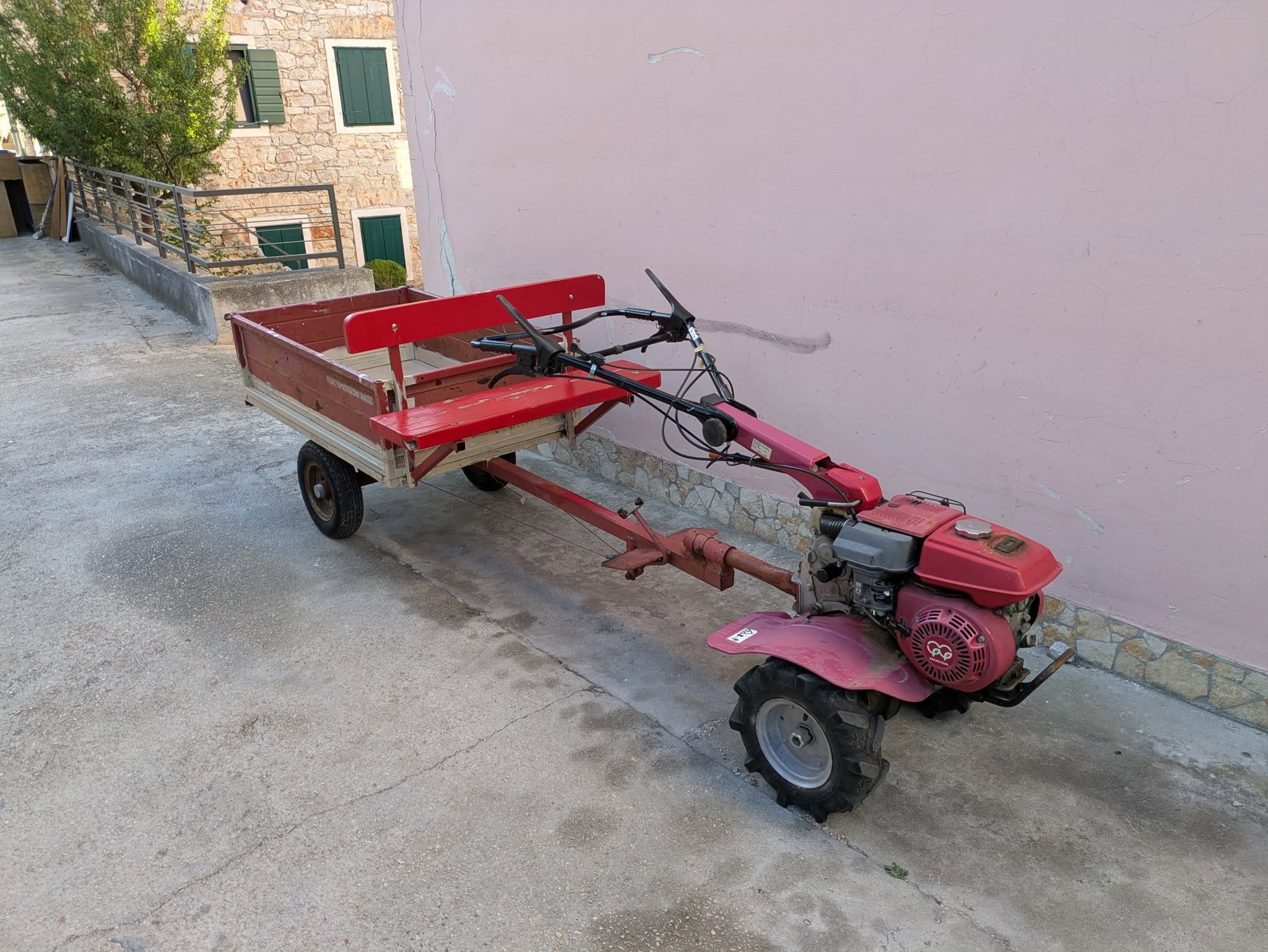
It’s small, so there are no cars, just bikes and the occasional golf cart, and a local contraption that looks for all the world like a box trailer being drawn by a lawn mower. The church bell rings out, as it must do every day here.
Just along the waterfront some government department somewhere has paid for a modern exercise park to be installed, and it sits, unused, quietly rusting away – looking so out of place it’s almost comical. The old men of the island, meanwhile gather to play bocce, and laugh and chatter. One older woman parks her bike, climbs down a ladder into the sea to swim as the sun sets. It looks as if she does this every day of her life. She probably does.
Kids swim and play and fish, while adult-sized people roll by on adult-sized tricycles, a few groceries from the general store the prize for a late afternoon outing. There’s a chest of pool and swim toys sitting by the water’s edge, free for anyone to use (and obviously much more heavily used than the exercise park).
It’s golden hour, the sun setting behind distant islands, and life seems just about as idyllic as you can possibly imagine. We sit on a bench by the water, nibbling on some pre-dinner snacks and reading the books we’ve carried from the other side of the world. Nobody pays any attention, we are just two visitors passing through.
Life here on the Croatian island of Zlarin seems so simple as to be just about perfect. Not for the first time these last few days I find myself thinking about all the ways we overcomplicate our lives. Surely it actually doesn’t need much more than a late afternoon swim, a game of bocce with friends, and a simple house in a beautiful place? Soon enough we will get back on our boat, and in the morning we will sail away to another place, and then in a couple of days fly back home to Australia.
I know I’m not the first to wonder about bringing home the simplicity I see in other places and other people, and trying to practice it in my place, with my people. That’s what I’m thinking about on Zlarin Island as the sun sets and a cool breeze blows.

 ordinary wonderer