Postcards from England: Partnership for Missional Church

While in Leicester (see the previous story!), we took the opportunity to sit down with Nigel Rooms of the Anglican Church’s Church Missionary Society (CMS) to hear about a project they’re running called the Partnership for Missional Church.

Now if you’ve hovering in church circles, you’ll have stumbled across this word ‘missional’ more than once or twice in the last few years.  It’s a conversation that has quite a head of steam as we continue to ask the question “what does it mean for a church to be shaped in response to its understanding of God’s mission” (or something like that).

CMS, through this program, are endeavouring to help local churches reflect on this kind of question, and to turn their attention to the notion that God is at work in their world, and the question of how to join in. These are, in a sense, the classic questions of the missional movement.

The program is a long-term one, taking three years to work through in a partnership between the local church and CMS (or the program’s original developers, the Church Innovation Institute in the USA) in three movements:

  • Year 1: Listening
  • Year 2: Experiment
  • Year 3: Focussing

It also incorporates a heavy emphasis on discipleship – through five practices: dwelling in the word, dwelling in the world, announcing the kingdom, hospitality (of which more in a moment), and corporate (collective) spiritual discernment. It all hangs on a range of ‘ologies’ including theology, sociology, missiology, ethnography and so on.

The process seems in some ways to be a carefully assisted change process. The community is introduced to the capacity to understand itself, it’s world, and it’s God in new ways, and then supported as it responds to those new understandings.

There were, once again, a few topics explored in the course of the afternoon that captured my attention.

The first was the mention of hospitality. At risk of being something of a broken record, this is a topic I’ve wondered about before – in particular the tendency in our world to put ourselves in the place of host when we think about hospitality – whereas the Jesus stories are filled with encounters in which Jesus is the guest rather than the host.  Learning to be guest in our communities, and to see God at work in the world and life of our host is a critical skill.

The second related to an observation from systems theory about the interplay between process and outcomes. The theory (as I heard it expressed) suggests that in a given situation we can either control the process, or the outcomes, but not both. In the Partnership for Missional Church exploration, the attempt is to manage the process – and to let the outcomes be whatever they may be (or whatever God may determine…to take a slightly more theological tone).  The PMC journey is a carefully managed process, but with not pre-determined, or even preferred outcome envisaged before it begins.  What will be, will be.  I’m drawn to that approach.

Thirdly, we heard that there is a body of research that suggests that local churches learn best from one another, than from professional trainers and consultants. As a kind-of-consultant, I of course rankled at this suggestion…but only for a moment. Of course there are times when insights from outside are helpful, but it does seem intuitively true that peer learning is a powerful tool – and that local churches (or their leadership teams) in conversation with one another can learn a great deal from one another’s experiences.  Which reinforces the importance of great relationships with neighbouring congregations. Let’s not be out there going it alone!

The next postcard is a few days away. We’re now gathered with teams from around the world in an International Learning Community on fresh expressions of church.  We’ve collectively agreed on a social media fast for the duration of the gathering (in terms of the gathering itself and the conversations we’re having here), so that we can be fully present to one another, and allow the full process of the gathering to work its way through out thinking.

I’ll tell you though that it’s been incredibly stimulating, and there are lots of thoughts and questions I’m wondering about.  I’ll be back to say more in the next postcard.

on meals, community, love and jesus

A message shared with Toowong Uniting Church in July 2017. Read John 13:31-35 first.

Last week, June 29 was Eat Together day in Canada.  A day when Canadians were invited to eat with neighbours, friends and colleagues, to see what happened. Watch this:

The official website introduces the idea like this: “When we eat together, good things happen. Whether its poutine, pad thai, paella, or pemmican. Nothing brings us together like eating together. We’re on a mission to make the world a better place by sharing a meal. It is time to stop watching and start acting! Join in on June 29th for Eat Together Day. Whether you eat with your neighbours, friends or family, make a time to eat together.”

It’s an invitation that is extended as part of Canada’s celebration of its 150th year as a nation. Other elements of the celebration include National Aboriginal Day, St Jean Baptiste day, Canadian Multiculturalism Day and Canada Day.  The film we just watched introduces the concept of eat together, and tells its own story. It’s a beautiful film, filled with funny, poignant moments. And it reflects many of those other elements of Canada 150.

I’m sure you that you, like me if you cast your mind back, can think of some memorable meals. Times and places where the table was the centre of a wonderful community time. Where conversation flowed as food was shared. Where the bonds of friendship were formed or strengthened.

There is something wonderful about sitting around a table and sharing together.

Continue reading

when numbers hurt

Some days, numbers are wonderful things.

When your favourite band hits #1. When your favourite athlete gets a high score. When you run or ride or walk a personal best. When your newborn has their longest non-stop sleep. When the number signifies an important anniversary or birthday.

Some days, numbers are wonderful.

And some days, numbers hurt.  Today it seems to me is one of those days.

The number killed and injured in a highrise building fire in London climbs inexorably higher, and itself is outweighed by the number killed in a Bangladesh mudslide.

The number attached to the Australian government’s legal settlement with Manus Island detainees is a reminder of the horrors of the conditions those asylum seekers are treated to, at the hands of the country we call home.

Some days numbers hurt.

This morning I had the privilege of sharing a breakfast table with World Vision‘s Tim Costello, in Brisbane to speak at an annual Churches of Christ gathering today.  The conversation ranged far and wide, but again it was a couple of numbers quoted in different parts of the conversation that left me startled.

At one stage we talked about gambling in Australia, and poker machines in general. Costello is a passionate advocate for managing this insidious, addictive blight on our society.  The number in question was 20%.  Australia, home to just 0.3% of the worlds population, hosts more than 20% of the worlds poker machines. 20%. Machines that are specifically designed to take money away from those who use them. And that are most often located in communities that can least afford that loss. 20%. If you want to see some more numbers about poker machines that hurt, go here. Oh, and I was also reminded that one of the biggest profit-makers from pokies in Australia is Woolworths….that’s right…the fresh food people.

And then we talked about South Sudan and Uganda.  Australia, one of the richest nations on earth has since 1947 accepted something like 800 000 refugees. It’s a big number. And if it wasn’t for our recent record it could make us feel all warm and gooey inside. Uganda, at the other end of the global rich list has willingly accepted 1 000 000 refugees from South Sudan in the last 7 months. 1 000 000 in 7 months. And provided land to build a home and grow crops, and access to education and hospitals (such as those things are in Uganda).  Together with NGO’s like World Vision (supported, it has to be said by the generosity of ordinary Australians) they’re tackling what seems like (and may well yet prove to be) an insurmountable problem.  It’s an extraordinary effort, but for all that the effort is amazing, the numbers still tell of a world of pain and brokenness.

I don’t post this today to start a political debate. Simply to say that some days, numbers hurt….and today those numbers remind me that in our country, and in our world, we have a long way to go, many challenges to overcome.

Hopefully those same numbers can motivate us to act.

on leadership…again

If you’ve hung around here for a while you might recall that this is far from the first time I’ve posted about leadership. This time though, I’m not writing, but talking. And sadly for you all, it’s on video! 😉

Recently I sat down with Ben Rogers, editor of Journey magazine to record a chat about leadership – and specifically about Christian leadership.  Below is the video of our chat, and here’s the article that precipitated the conversation.  And, if you’re a glutton for punishment, here’s some more of my potentially baseless musings on leadership.

Your comments are welcome.

life is made of moments

NB: Before you read, it might help to know that this is the text of a message I shared at Toowong Uniting Church, August 9th 2015. It refers to a story from Acts 4:26-40. The context at Toowong is that they are preparing to plant a new congregation.  If you’d rather listen than read…skip to the end of this story for the mp3 file.


It seems to me that this life that we live is made up of moments.

If you think back over your life, I’m sure you can identify a few of them.

I think of the moment I saw Sheridan walk into a friend’s 21st birthday party and I instantly knew that I wanted to spend the rest of my life with her.

I think of the moment I made a bad decision and tore up my knee, ending up in surgery just weeks before our first child was due.

I think of the moment I learned a huge lesson about leadership, as I sat quietly to one side during an outdoor education program I was helping to run.

I think of the moment when I woke up one morning and realised that for the first time in 6 years all the kids had slept all night.

Some moments are wonderful, some not so much.

Some are extraordinary, while others are just the moments of everyday life.

Some moments, like my encounter with Sheri at that 21st birthday party, change our lives instantly. And we know it in the moment (or at least, I knew it…you’ll have to ask Sheri about her experience of that moment).

Others take a while to reveal themselves – and sometimes it’s only with the benefit of hindsight that we can see the power of that moment.  Such is the story for my learning about leadership on that outdoor education program. The moment actually passed unremarkably that night…but the more time passes, the more I reflect on that moment…the more it means to me.

This life that we live is made up of moments.  I’m sure you can identify a few of them.

In this passage today, this story of Philip and the Ethiopian (read it here Acts 8:26-40), there’s a lot going on, and we’ll work our way through some of those things over the rest of our time.

But at the heart of it is a moment. A chance encounter. The intersection of two people’s lives that changed both of them forever.

Such is the importance of a moment. And this life that we live is made of them.

Continue reading

workshop description: the art gallery

I’ve had the pleasure of hanging out with ministers and leaders of Uniting Churches in a Queensland city in recent months as they work together to try and figure out what the future looks like.
It’s been enjoyable to be a small part of what is a gentle process of sharing stories, getting to know one another, and slowly activating an imagination about a shared future.

Last night was the next step in the process, and a fun way of encouraging imagination, creativity and building something together.  We had about 35 present for an evening event we dubbed “The Art Gallery”. Read on for a description of what was a fun, creative and imaginative night of resourcing leadership. Continue reading

a little peace of christmas

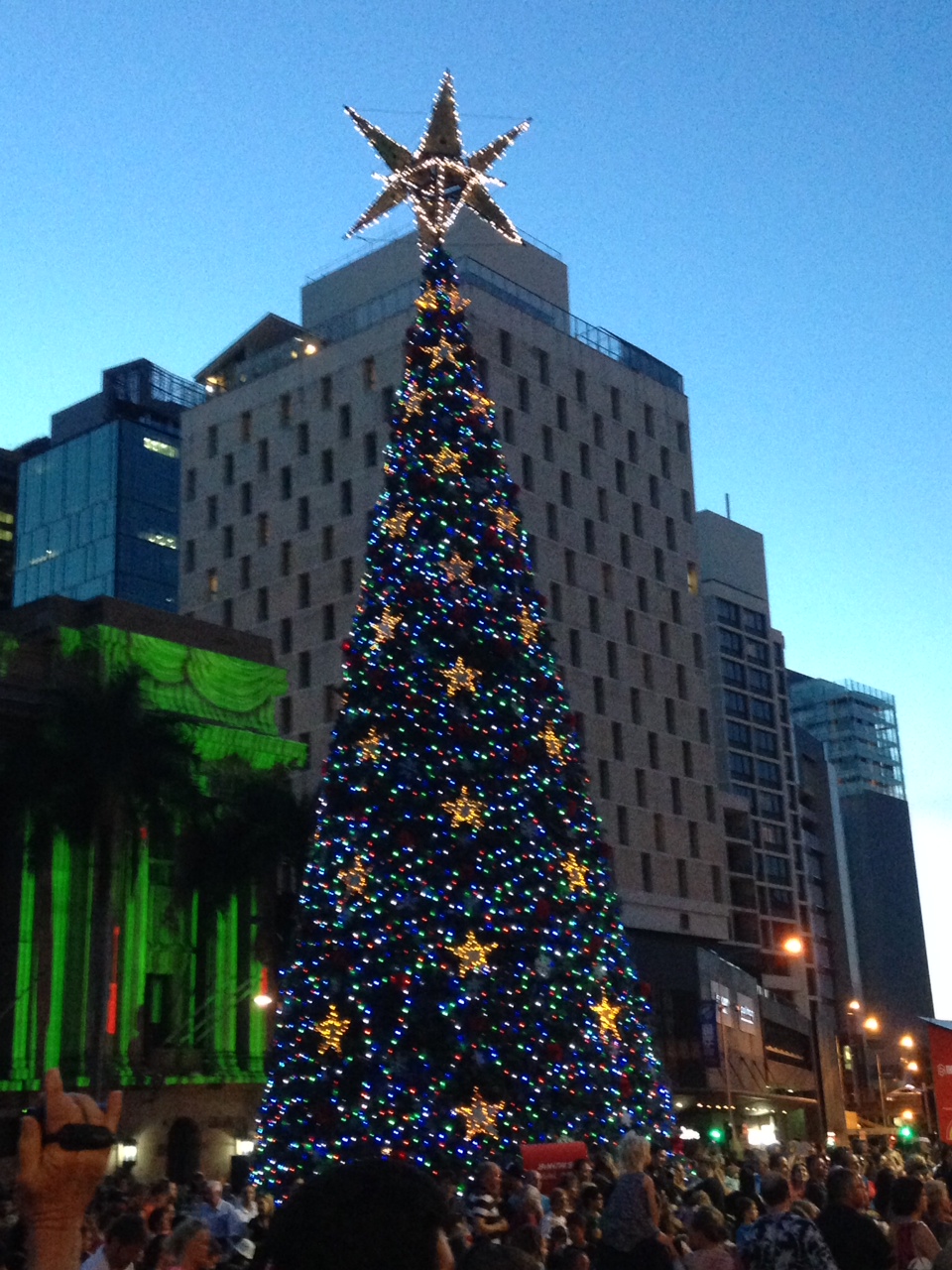
christmas treeI found myself in the Brisbane city centre this week, taking my kids to see the parade, pantomine and (honestly, amazing) city hall light spectacular.

It’s Christmas, it’s school holidays, it’s a fun outing for the kids.  Those were the kind of thoughts in mind as we headed off into town.

Unexpectedly to find myself in the middle of my own baffling analysis of what Christmas means today.

The parade was an impressive but kind of confused mix of the Nutcracker story with Christmas themes. Marching bands, ballerinas, stunt-mice, toy soldiers, choirs, dancing Christmas trees, kids dressed as gifts, Santa in his two-reindeer-drawn-sleigh (the rest presumably resting up for the big flight on 25/12) were all in the mix.

And right in the middle, somewhere after the christmas trees, gift-wrapped children and marching drummers, came Mary on a donkey (baby Jesus already born, hung in a sling from Mary’s shoulders) with Joseph alongside, and a few shepherds (real sheep!) and wise men (real camels!) following along behind.

They passed by follow by Santa, then a giant inflatable toy train and the aforementioned stunt-mice (no, I have no idea why either).

I found myself thinking “well, it’s nice that in a commercial Christmas parade there is a little room for Jesus, good on them.”  It’s almost incarnational, Jesus in the parade, passing by 10-15-20000 people, reminding them there is more to Christmas that gift-wrapped commercialism and tinsel-draped pine trees.

And then later, as I pondered some more I started to wonder if it was so good after all?

Perhaps its not so good that Jesus fits neatly into the parade between the presents, the santa, the dancing tree and the stunt-mice. Just another costumed actor in a mixed-message presentation of all that Christmas means in Australia.

For Christians of course, Jesus is the reason for the season. The main thing.  Santa, gifts, family etc, they come as secondary considerations (important, celebrated, fun, valued, but still secondary).

For our nation, as we move from being a kind-of-christian society to a mixed, multicultural, multi-ethnic, multi-religious, kind-of-secular state, it seemed to me that this Christmas parade was a bit of a metaphor for what’s going on.

A bit of everything, maybe no real connected, articulated meta-story being told?

And I wonder if the presence of Mary, Joseph, Jesus, the animals, sheep and wise-men in this whole big mess raises some questions for the Christian church.

Does it (do we) just want to be one more dressed-up set of actors in the midst of a whole parade? A bit part in the whole confusing story of what it means to be Australian, human, created, community in the 21st century?  Any particular message we might have to share…does it just get lost in the mumbling?

Or is it more important in this time and place to stand out, to be distinctively different, sure and certain of what we claim to believe, who we claim to follow? Should we refuse to participate in the parade at all?

And if we do, does this sanitised, commercialised, feel-good image of the beautiful baby, silent-night, well-dressed shepherd thing kind of inoculate the world against any real power of the Jesus story?

For it is a scandal, this story. Here is the creator of the universe, this God who is all knowing, all powerful, come to life as a helpless, crying, poo-ing baby, spending his first night in an animal’s feed-trough to a teenaged mother and recently-contemplating-divorce father.

This child who would spend his life counter to every human expectation of the son of God, eschewing wealth, power, privilege, refusing to live into the expectations of those around him.

Who would claim time and again that true humanity stands with the powerless, heals the sick, hugs the unhuggable, loves the unlovable, frees the unfree-able, knows the unknowable.

This child-to-become-man whose unremarkable beginning and completely localised life, unknown more than 100 miles from his birth-place would spark generations of debate, discussion, passion, compassion, grace and controversy the world over.

Maybe after all, his place is here, easily-lost in the midst of this Christmas parade of options, one helpless baby in a sea of hundreds of singers, actors and dancers, unable to convey any message beyond love and total dependence.

Maybe it’s a reminder, that even if we forget sometimes, God is in all things, all times, all places. Sometimes easily missed, for sure, but there nonetheless.

In the midst of your Christmas, as you tip-toe between wrapping paper, torn-apart bon-bons, plates of half-eaten prawns, sleeping uncles, half-built Lego and squabbling children, may you notice the anonymous baby in the midst of the parade.

May you ponder his place in the drama of Christmas.

And his place in your life.

Merry Christmas.

on anticipation, christmas and an unexpected jesus

On Sunday I had the opportunity to speak during the morning service at Toowong Uniting Church (our family hangs out with the TUC community regularly). It’s a rare thing for me, and aside from the anxiety it induces, it was an enjoyable experience.  The message is based on a reading from Matthew 11:1-11 – read it here. Here’s the words I used on Sunday:

Recently I had the opportunity to head over to New Zealand for a few days to help my brother celebrate what we like to call a “zero” birthday. He was turning 40.

We had been planning the trip most of the year since first deciding to go, and had a pretty fair idea of what it would involve.  5 blokes, a lake house, a big bike ride, golf, great food and drink, spectacular scenery, spur of the moment adventures. What’s not to like about that plan?

I have to tell you that for the last couple of months, thoughts of that NZ trip were never far away for me.  I was excited to go, and would spend completely inappropriate amounts of time looking forward to the trip, imagining what the experience would be like, living out the various adventures we had planned while we were there.

The anticipation was delicious. And unbearable.  I was so excited I could hardly wait. Continue reading

new world….new tricks

Photo 18-10-13 3 43 09 PMThere I sat in the main lounge at Canberra airport, tired after a long week and ready to head for Brisbane and home.

And in wandered four snappily dressed people, a heap of music and sound gear on their trolley, and started unloading just behind us.

The Griffyn Ensemble – Canberra’s Best Chamber Music Foursome” read the banner as they erected it, and started setting up keyboard, microphones, speaker and music stands in what must be just about the most unlikely setting for such a group.

They slowly set themselves, tuning instruments, and completing little sounds checks as they set and reset volume and listened carefully for the acoustics in this relatively new airport lounge.

It seemed they hadn’t played there before as they experimented with different settings, looking for the perfect combination of sound in an unfamiliar, and unusual setting.

I don’t know about you, but I’ve never heard chamber music live on a Friday afternoon in a busy airport terminal.

What I appreciated about the experience was watching this group bring their skills, gifts, instruments and equipment to a completely new setting.

It seemed experimental, unfamiliar and a challenge for the group (though it looked to be an challenge they were enjoying).

I couldn’t help thinking about other aspects of my life where those same experiences are under-way.

In the church I work with we are constantly wrestling with how to bring ancient rhythms and patterns, treasured gifts and approaches and apply them in a whole new world that is opening up around all of us.

The challenges of this new time and place are profound and unique – just as I imagine playing chamber music in an airport hall must be.

Sometimes we find it all a bit too hard, all but giving in to the temptation to pack up our instruments and head for more familiar territory.

But you know what? The gentle sounds of that soft and somewhat unusual music filled the room, and suddenly it seemed right and natural.

I don’t know whose idea it was, but I was glad for the Griffyn Ensemble that afternoon, just as I am glad every time I see someone experimenting, trying old things in new places, or even new things in old places.

My prayer for the church is the spirit of creativity, of boldness, of risk taking as it seeks to relate to a new and different world.

It might take us a while as we tune instruments, check the volume and get used to a new and unknown acoustic.

But the sweet music of grace, compassion and gospel can just as readily fill the room, wherever we find ourselves – if only we can find the courage and willingness to trust our giftedness…and try.

the gift of cobbold

IMG_0912Cobbold Gorge is a narrow crack in the sandstone plains of Robin Hood Station, around 6-7 hours drive north west from Townsville.

The Gorge grew over a long period of time, water slowly seeping through the cracks, washing away sediment and eventually gouging a way through the sandstone as the  young (in relative terms) gorge grew.

And then in only the early 1990’s was it “discovered”, fully formed.

It is a remarkable sight, well worth the time to travel into its depths by silent electric boat, the Savannah Guides revealing many of it secrets (even if not the resident freshwater crocodiles on the day we visited).

Cobbold Gorge is home to another secret too, another that grew little by little before popping into existence in recent times.

Camp Cobbold is the brainchild of dynamic mother/daughter duo Katerina Keogh and Min Jones, and takes place at the Cobbold Gorge campgroup/resort (neither label seems quite enough on its own) each September/October.  Backed by SU Qld and with the support of a diverse range of volunteers, it is an amazing gift of generosity to isolated northern Queensland cattle farming families who daily do battle with the trials of distance, drought and disadvantage.

Camp Cobbold can’t possibly fix all of those immense challenges, but it offers the families that come a few days of respite, the social interaction so limited by isolation, and access to a range of experiences and services brought by the camp team that are normally not readily accessible.

In 2013 around 40 families came, with about 120 kids and their (mostly) mums living at Cobbold Gorge for 5 days.

My family were privileged to be among them, joining a team of 30 from Toowong Uniting Church to convoy north and offer our support and assistance for the week.

Our camp-week seems to have disappeared into a heat haze of over-powered memories.  Dirt and dust. Flies and wallabies. Heat and harshness.  Smiles and tears. Fun and games.

Resilient, fighting, fun-loving people.

Gorgeous kids who at one moment seem just like any other (city) kid, but in the next reveal their different context by declaring their favourite activity to be “shooting pigs with dad”.

Many will leave home at age 11 or 12 to go to boarding school, likely not to return.

And with one failed wet season after another, the earth is parched, the cattle withering, sale price of cattle not even covering the cost of transport to market.

It’s heart-break upon heart-break.

And yet, despite those realities that lie beneath daily life, Camp Cobbold is a place of celebration, of laughter, of joy.

A place of renewed and restored relationships, of learning and discovery, of new experiences.

And that’s exactly the point of it all….at least as I understand it.

The team that traveled north to help with Camp Cobbold was diverse, professional services like speech therapy, physiotherapy and counselling, joining practitioners such as beauty therapists, swimming coaches, poets and youth workers.

The team offered a lot, gifted a great deal to the families of the north; and their work and generosity is to be celebrated.

But to be honest, every one of us gained so much more in return that it hardly seems like a fair deal.

We learned so much about ourselves, so much about the nation we live in, and so much about the people we share it with, I’m pretty sure I know who gets the best of the arrangement.

Thanks SU Qld, Cobbold Gorge and Toowong Uniting Church for making space for us to join you for the week. But thanks most of all to the families of North Queensland cattle stations who welcomed us, forgave our uneducated city ways and extended friendship and welcome.

Any time you can visit Cobbold Gorge would be pretty special, but in Camp week it’s something else entirely.