the life of the international athlete ;)

Have you heard the one about the lawyer, the architect, the social worker, the restaurateur and the minister?

Sounds like it would be a terrible joke to me!  But that’s the mob with which I travelled to New Zealand recently for my first tilt at being an international athlete.

We were making the trip to NZ to ride in the Lake Taupo Cycle Challenge  – a weekend cycling festival that draws in over 8000 entries for a variety of events. The majority, like the five of us, were there for the “Solo” – a 154km circumnavigation of the stunning Lake Taupo.

In the field of somewhere between 4000 and 5000 “Solo” riders is everything from semi-professional to barely prepared, from bikes with price tags that would make your eyes water, to K-Mart quality mountain bikes.  It’s not a race, but a challenge (yeah….right!).

For some the challenge is to beat a personal best time, for others to beat their mates.

For some it’s an endurance event. A very small group go out to complete 2, 4 or a staggering 8 laps of the 154km course.  There are shorter (family friendly) rides too, along with relays and some spectacular mountain bike events.

For many, and for most of our group this is true, the challenge was to complete the Solo course and enjoy the experience.

We were at the ride as a celebration of my brother Paul’s 40th birthday.  Rather than a giant party, it’s becoming more and more common these days (at least in our circle of friends/family) to mark the momentous birthday with a special experience – and because there’s no fun doing something like the Taupo ride with a bunch of strangers (and to make sure he got home in one piece), a few of us joined the expedition.

As our trip to NZ was all about the ride it was a pretty short one – but we did manage to pack in a round of golf at Taupo Golf Club (where the rough was unbelievable, and the golf not much better!) the day before the ride.  And then a hilariously out of control encounter with the concrete luge racing track at Rotorua Skyline the day after. Less said about that the better in case word gets back to them of our shenanigans and we get blacklisted!

The ride, of course, was the main event.  It was hilly (somewhere around 2000m of climbing over the course) and made all the more difficult by what started as a stiff breeze and got steadily stronger as the day went on.

Most frustratingly, the wind backed around over the course of the day, meaning that for 90% of the ride we either had a headwind, or a nasty cross-wind. Neither is much fun to ride in! A little rain occasionally wasn’t too much to worry about and temperatures were pretty nice for cycling all day – hovering between 15 and 20 C.

Weather aside, it was a wonderful experience to ride with more than 4000 other cyclists, to find groups in which to draft, hide, lead and chat, to meet and talk with so many cyclists from every corner of NZ and a few other places further afield (about 300 Aussies for example).

We tried to set a realistic pace and all got through the ride pretty comfortably in the end. Paul suffered a couple of punctures which slowed him a little, and Tony some drive-train issues on the downhill sections – but otherwise we were trouble free.

The scenery was beautiful, our loop taking us through lush green pastures, rolling hills, lovely forest and the stunning lake-side drive along the southern edge of the lake.

View from the 92km rest stop looking over Lake Taupo

There was plenty of climbing to do, most of it in the first 90km, but nothing too serious. Grades were moderate and the pace comfortable enough. The notorious Hatepe Hill at the 130km mark turned out to be pretty manageable – with our only tailwind of the day helping us up the long grind.

Tucking into a group and blasting along the rare flats at around 40kmh was definitely a highlight, along with some very fast descending. My speedo registered a top of 70km/h during the ride. For a proper cyclist that’s unremarkable, but for me….let’s just say I knew I was alive!

Our group split up a little over the course of the day. Dug is much faster than the rest of us so set off early in one of the fast groups. The rest started together but splintered a little on the first 12km (pretty much all uphill!) section.  And then Paul’s second puncture split us again so we all came in solo. Dug hit the 154km in around 4hrs 48 mins, myself 6.26, Simon 6.29, Paul 6.34 and Tony 7.04.

I couldn’t have been happier with my own ride. I felt good all day and did plenty of leading as well as some following and hiding out of the wind. There were some fast groups that we couldn’t quite hang on to, but not for want of trying!

I hadn’t cranked out huge rides in training (my longest training ride went around 90km) but I spend plenty of time lapping Mt Cootha and a couple of trips over to Mt Gravatt…and that really helped. I had no trouble with the hills and felt very strong on the flats.  Maybe it helps that I do most of my training rides solo, with no group to tuck in behind…who knows.  A freshen up of the bike (Giant Defy 3) with some new light/fast tyres definitely sped things along as well.

It should be said that the last 20 km was awful.  Gusty, nasty side winds, narrow road, lots of traffic and then a turn into a blunt headwind for most of the last 3-4 km just plain hurt.  It would have been nice to ride in with the sun shining and a gentle breeze at our backs for that last half-hour…but not to be!

So the Contact Lake Taupo Cycle Challenge 154km Solo ride is done and dusted.

Would we do it again?  Absolutely.

Will we actually do it again? Who knows.

If you’re a cyclist, put this ride on your list as a fantastic experience and a very well organised event.

And besides, there’s nothing quite like being an international athlete.

PS: Paul, in case you read this. There is no way, not now, not in 2015 that I am riding the Victorian Three Peaks ride.  4000m of climbing over 210km in a single day? I hope you enjoy it!

9 people who write

I have a few friends (and family) who write what I think are the most interesting things. You should go for a visit and see if they are your style. Here’s some of my favourites:

wednesday wonderings – gathering grace in the everyday:  Caroline has been living in Cambodia for years now, and just as she prepares to return to Australia, I discover this quite lovely, thoughtful (and thought-provoking) collection of stories and observations from her time there. I wish I had known of it sooner, and I hope Caroline continues to write with a kind of cross-cultural eye when she returns.

katie is travelling:  Katie is the kind of interesting, funny, bang-on writer I wish i was.  Mostly she writes stories here from the road (which might be anywhere in the world) and you will laugh and cry with her – guaranteed.  She’s also about to release her first book and I’ll be plugging it when it’s out and about.

matt guyatt golf:  really interesting insight into the life of a pro athlete. Last Sunday I watched on at the Australian PGA Championship as Matt’s day went pear shaped in full public view. 4am the next day he is on a plane to the next tournament – no time to lick wounds, recover or process.  Glamorous? Not so much.  Check in for Matt’s stories from life on tour.

passing phase: Tracey started writing almost as therapy while figuring out how to be mum to a pair of rambunctious twins (that’s my words from the outside, not Tracey’s). Passing Phase is growing as the boys grow and now explores all sorts of ideas. Topics like parenting and family, disadvantage, politics and education all feature regularly.  I like it most when Tracey rages. There’s nothing quite look a good, well written vent.

scott warner photography: Scott is awesome with words, but he’s building a new kind of way to share life with photos. Check out some stunning images from south east Queensland and beyond.

the kids inheritance: my folks are grey nomads, wandering around Australia in their caravan, spending my inheritance. I wouldn’t have it any other way. Mum is the writer and a growing photographer, stories filled with fascinating detail about all sorts of places that I might never visit.

weave and wonder: it’s kind of photoblog, meets writing blog, meets small business. Weave and Wonder is both Melissa’s child-focussed art project/business and a place where she connects art, colour, pattern and rhythms of life. Also a prolific and quite delightful instagrammer here if instagram is your style.

hold this space: Cheryl writes what I like to think of as “dispatches from the edge”.  From the edge of faith. From the edge of society. From places many of us don’t visit.  And she writes so poetically I can almost (almost) forget I’m being pushed and challenged by the experiences behind the words.

riley says:  Not only because I’m the proud dad of 11 y/old Riley, but because she writes funny and interesting stories and poems from her vivid imagination. Her ode to Tasmania’s incomparable Maria Island is a ripper.

I hope you take a few minutes to visit some or all of these. They’re fascinating sites in their own right, but written by people who I know to be truly what the pages present.

new world….new tricks

Photo 18-10-13 3 43 09 PMThere I sat in the main lounge at Canberra airport, tired after a long week and ready to head for Brisbane and home.

And in wandered four snappily dressed people, a heap of music and sound gear on their trolley, and started unloading just behind us.

The Griffyn Ensemble – Canberra’s Best Chamber Music Foursome” read the banner as they erected it, and started setting up keyboard, microphones, speaker and music stands in what must be just about the most unlikely setting for such a group.

They slowly set themselves, tuning instruments, and completing little sounds checks as they set and reset volume and listened carefully for the acoustics in this relatively new airport lounge.

It seemed they hadn’t played there before as they experimented with different settings, looking for the perfect combination of sound in an unfamiliar, and unusual setting.

I don’t know about you, but I’ve never heard chamber music live on a Friday afternoon in a busy airport terminal.

What I appreciated about the experience was watching this group bring their skills, gifts, instruments and equipment to a completely new setting.

It seemed experimental, unfamiliar and a challenge for the group (though it looked to be an challenge they were enjoying).

I couldn’t help thinking about other aspects of my life where those same experiences are under-way.

In the church I work with we are constantly wrestling with how to bring ancient rhythms and patterns, treasured gifts and approaches and apply them in a whole new world that is opening up around all of us.

The challenges of this new time and place are profound and unique – just as I imagine playing chamber music in an airport hall must be.

Sometimes we find it all a bit too hard, all but giving in to the temptation to pack up our instruments and head for more familiar territory.

But you know what? The gentle sounds of that soft and somewhat unusual music filled the room, and suddenly it seemed right and natural.

I don’t know whose idea it was, but I was glad for the Griffyn Ensemble that afternoon, just as I am glad every time I see someone experimenting, trying old things in new places, or even new things in old places.

My prayer for the church is the spirit of creativity, of boldness, of risk taking as it seeks to relate to a new and different world.

It might take us a while as we tune instruments, check the volume and get used to a new and unknown acoustic.

But the sweet music of grace, compassion and gospel can just as readily fill the room, wherever we find ourselves – if only we can find the courage and willingness to trust our giftedness…and try.

you are a machine!

Recently I was in Canberra for work, staying with a friend in the foothills of Mt Taylor, to the city’s south.

With my battle against middle age continuing, I packed the running shoes, intending to get out for an early morning run before each day’s conference gathering got under-way.

My host advised a left turn from his driveway and then head up towards Mt Taylor to pick up a flat walking trail that runs all the way around the bottom of the mountain with quiet countryside and spectacular views – and a distance of around 5k or so.  Perfect.

So I headed out, turned left into the park and started up the 2-300m straight uphill section (flat!) to the walking trail.  As I huffed and puffed my way up the hill, a young bloke came around the corner at the top and headed down the trail toward me.

As we passed, him strolling downhill, me doing a good impression of a man about to have a heart attack, he spoke to me:

“Great work! You are a machine!”

I puffed my way up, and he was gone.  Never seen him before, unlikely to ever see him again.

Those words were powerful, just as I felt like slowing to a walk I found a little extra energy to complete the last of the climb to the trail.

A machine!

Now honest truth be told, I would have looked anything but.  Hunched over, almost shuffling, breathing hard, mismatched running cclothes, ill-fitting old cap.

Some machine….

But, days later, I still feel a little burst of energy when I think of his words.

They cost him nothing to utter. Just a couple of words to a complete stranger.

Such is the power of encouragement.

Further on in the run I nodded hello to a couple of retired blokes out walking their dogs. Later as I looped around the mountain I came upon them again, this time a more friendly greeting exchanged between us all.

Day two and and I ran Mt Taylor once more. How could I not? I was a machine!

Of course I saw those two same gents and their pair of pooches, out for their morning walk, and the greeting was once again a little more friendly as I continued on my way.

And then one final time as I neared my last stretch, almost out on my feet with the hills in my legs (flat!), I ran into that same pair, chatting animatedly, walking their dogs.  They looked up, saw me coming and one spoke aloud to his friend, and to me:

“Aha, we know this guy, he’s the runner! Keep it up, you are doing awesome!”

I returned the greeting, we chatted momentarily as I passed, and that was that.

From somewhere came the energy to finish out that run, standing just a little taller, striding out just a little longer.

Words are free.

But they are also priceless.

Of course just as easily words can hurt and drag down, but on this occasion, these occasions, two different people offered freely the gift of encouragement to a stranger. Words not deserved, or earned, and with nothing to be earned in return by the giver…..but given anyway, given generously.

And not only did I run a little longer and better as a result, but resolved to pass on words of encouragement wherever I can, to friend or stranger.

Encouragement might just be the gift that keeps on giving.

And it’s free.

Get better than that.

the gift of cobbold

IMG_0912Cobbold Gorge is a narrow crack in the sandstone plains of Robin Hood Station, around 6-7 hours drive north west from Townsville.

The Gorge grew over a long period of time, water slowly seeping through the cracks, washing away sediment and eventually gouging a way through the sandstone as the  young (in relative terms) gorge grew.

And then in only the early 1990’s was it “discovered”, fully formed.

It is a remarkable sight, well worth the time to travel into its depths by silent electric boat, the Savannah Guides revealing many of it secrets (even if not the resident freshwater crocodiles on the day we visited).

Cobbold Gorge is home to another secret too, another that grew little by little before popping into existence in recent times.

Camp Cobbold is the brainchild of dynamic mother/daughter duo Katerina Keogh and Min Jones, and takes place at the Cobbold Gorge campgroup/resort (neither label seems quite enough on its own) each September/October.  Backed by SU Qld and with the support of a diverse range of volunteers, it is an amazing gift of generosity to isolated northern Queensland cattle farming families who daily do battle with the trials of distance, drought and disadvantage.

Camp Cobbold can’t possibly fix all of those immense challenges, but it offers the families that come a few days of respite, the social interaction so limited by isolation, and access to a range of experiences and services brought by the camp team that are normally not readily accessible.

In 2013 around 40 families came, with about 120 kids and their (mostly) mums living at Cobbold Gorge for 5 days.

My family were privileged to be among them, joining a team of 30 from Toowong Uniting Church to convoy north and offer our support and assistance for the week.

Our camp-week seems to have disappeared into a heat haze of over-powered memories.  Dirt and dust. Flies and wallabies. Heat and harshness.  Smiles and tears. Fun and games.

Resilient, fighting, fun-loving people.

Gorgeous kids who at one moment seem just like any other (city) kid, but in the next reveal their different context by declaring their favourite activity to be “shooting pigs with dad”.

Many will leave home at age 11 or 12 to go to boarding school, likely not to return.

And with one failed wet season after another, the earth is parched, the cattle withering, sale price of cattle not even covering the cost of transport to market.

It’s heart-break upon heart-break.

And yet, despite those realities that lie beneath daily life, Camp Cobbold is a place of celebration, of laughter, of joy.

A place of renewed and restored relationships, of learning and discovery, of new experiences.

And that’s exactly the point of it all….at least as I understand it.

The team that traveled north to help with Camp Cobbold was diverse, professional services like speech therapy, physiotherapy and counselling, joining practitioners such as beauty therapists, swimming coaches, poets and youth workers.

The team offered a lot, gifted a great deal to the families of the north; and their work and generosity is to be celebrated.

But to be honest, every one of us gained so much more in return that it hardly seems like a fair deal.

We learned so much about ourselves, so much about the nation we live in, and so much about the people we share it with, I’m pretty sure I know who gets the best of the arrangement.

Thanks SU Qld, Cobbold Gorge and Toowong Uniting Church for making space for us to join you for the week. But thanks most of all to the families of North Queensland cattle stations who welcomed us, forgave our uneducated city ways and extended friendship and welcome.

Any time you can visit Cobbold Gorge would be pretty special, but in Camp week it’s something else entirely.

leadership 8: riding out the vacuum

Over the last few weeks as I’ve pondered leadership lessons, I’ve had cause on several occasions to think back to my time in outdoor education, working with Higher Ground Australia.
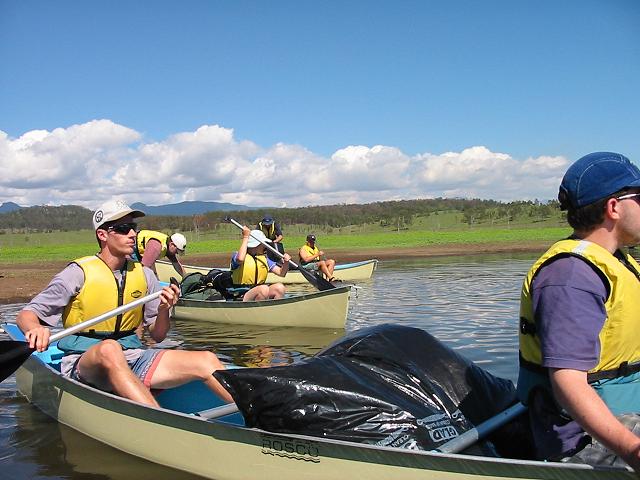
One of my very first encounters with the crew at HGA took place on a training weekend. I was there as a potential staff member, alongside a range of others who were interested in developing outdoor leadership and facilitation skills. We were working through a series of practical and theoretical sessions over the weekend.

One of the most memorable moments of the weekend for me (and it would live long in the collective memory at Higher Ground) happened late one evening. We had been out running some navigation and rescue simulations before being sent scurrying by an electrical storm.  As we (a group of 20-25 potential leaders) gathered in the warm, dry shelter of the campsite hall, we figured the experienced HGA leadership team would tell us what to do next – when it would be safe to move back outside, or whether the evening’s activities would be cancelled due to the weather.

Those same facilitators abruptly asked us to make our own decision with only one condition – it had to be unanimous – and then retired to the back of the room to watch.

In a complete leadership vacuum, the consequence was both predictable and frustrating and eventually a powerful lesson.

Loud voices dominated.

Proposals were offered, analysed, and often split the group.

Consensus was far away.

Voices were raised, frustration increased and a stalemate quickly grew between those who wanted to return to the activities, and those who wanted to call it done as rain continued to fall.

There was no solution reached, and eventually the leadership team returned, quickly moving the conversation from whether to return to the activity or not, to an analysis of what had just unfolded between us.

In a sense of course, the situation was artificial. But as a participant, the experience was powerful.  With no structured handover, no established hierarchy there was an absence of leadership.  Some offered power as a solution, some quiet reason, some obstinate refusal.

This week in class one of the topics we touched on was the transfer of power from one leader (or leadership group) to the next.

There is a sense in which the incumbent leader needs to release power, to let go. And to do that fully and properly, not holding on to influence over the community. That’s maybe a story for another day.

And there is always the need for the next generation of leader/s to be identified, to take up the reigns as it were.  That too, might be a story for another time.

But it seems to me that there is always this in between time.  Even when there is careful transition from one leader or group of leaders to the next, there is so often a moment of uncertainty – when the relationship between the group/community/organisation and the new leader has to be understood on its own terms, rather than just depending on the endorsement of the outgoing leader and carrying on as all-systems-normal.

The question for me is: do we resist this in between time? Do everything we can to minimise it? Perhaps even imagine that we have arranged such a smooth transition that there is no need for the in-between?

My sense is (and feel free to disagree) that sooner or later the relationship between the new leader and the community will be tested, reformed and reshaped.  If we allow that process to happen naturally at the point of transition, just maybe that’s better in the long run than the re-shaping happening in the face of some challenge or crises a little while down the track.

However we manage it, three things have to happen in leadership transition.

  • Someone (or group) has to leave the leadership role, fully and properly and appropriately.
  • Someone has to be chosen or appointed.
  • The community/leader relationship has to be re-defined.

Even if the in-between space is uncomfortable, even if the outcome is uncertain, even if we feel momentarily rudderless….the in-between time matters a great deal because it’s where we understand who we are together.

That camp hall experience as the rain pounded down will live long for me. First as to what can occur in a vacuum of leadership with no process in place to move forward. But second as a reminder that however leadership transition occurs, there is always a moment (fleeting as it may be) where there are no hands on the wheel.

And that’s kind of ok.

By the way….we did eventually go back outside that night and finish our training activities. But we took so long to make the decision that the storm had passed and stars shone above. I think that’s a lesson in itself – about the power of procrastination!

NB: This is the eighth in a serious of posts reflecting on leadership, written during a Religious Leadership course with Trinity Theological College

NBB: That’s the end of the course. I’ll offer a closing thought on the experience in a week or two. If you were part of the course, let me invite you to send me your own reflections which I’d be very happy to post as a Guest Blog. Thanks for reading.

leadership 6: radiating possibility

I’ve just finished watching a video featuring author/conductor/inspirer Benjamin Zander. Go ahead and watch it, I’ll wait (you’ll need 14 minutes – but its worth it!).

(Credit – I was put onto the clip by Peter A who posted it over at the Forming Faith, Growing Disciples facebook group)

There’s lots to like about the clip, and the irrepressible Zander, but these lines struck me the most:

A conductor (of an orchestra) doesn’t make a sound.

A conductor depends for (his) power on the ability to make other people powerful.

My job (as a conductor) is to awaken possibility in other people.

You can tell when you are awakening possibility in someone because their eyes are shining.

It seems just about the most poetic and inspiring description of leadership that I’ve come across. The leaders task is to awaken possibility in another, to make them powerful, to make their eyes shine.

Zander goes on to talk about the ‘negative spiral’ language so common today, in which we manage to constantly talk everything down, in the process convincing ourselves that the world really is hopeless.  This, it seems to me, is exactly the opposite to awakening possibility in someone (and that’s Zander’s point).

In the church, the institution in which I work, the negative spiral is verging on out of control. We are too old. Our properties are a noose around our neck.  There aren’t enough of us anymore.  On, and on (and on and on) it goes.  We have all but removed any hope of awakening possibility in the people of the church.

Last night I was helping to host a mission planning conversation for a Uniting Church region (called a “presbytery” in our ever-so-helpful internal lingo) and we tried to identify the critical questions for the church to address.  Quite a few of the questions that emerged were ‘negative spiral’ kinds of questions – but not all.

One of my favourites came from a group who simple asked, “how can we turn our negatives into blessings?”  That, it seems to me, is a question that starts from a place of possibility, of hope that there can be a new way.

It reminds me that in class last week, we encountered Stanley Hauerwas, and some of his thoughts on leadership.  I took five things from the encounter with Hauerwas (watch the video here):

  1. The leader articulates a vision, or speaks for the community.  The leader doesn’t speak to the community, but for it – recognising the vision, the image that is within and declaring it out loud
  2. Innovation and creativity are critical in the art of leadership, and they can be habits formed intentionally – in an individual and an organisation (*)
  3. The leader’s role is to recognise what is within – what giftedness can be found in the community – and empower it
  4. It’s impossible to lead without community engagement – the leader cannot operate in a tower of isolation
  5. The discipline of the ego (of the leader) is vital

Most of those lessons came to mind as I watched Benjamin Zander riff on possibility, on awakening, on seeing eyes shine.

And I was reminded of one experience from my own life that came closest to that kind of encounter.

I went to visit a group from a very small rural church in Tasmania. The group consisted of mostly elderly ladies (and as a result featured the most lavish country style afternoon tea!) and the purpose of our gathering was to think about the future of their church.  The conversation didn’t start well, with the clear declaration that “we are too old, too few in number to have any kind of future”.  I wanted more of that afternoon tea so didn’t want the conversation to end too soon, so we poked and prodded and explored and wondered for a couple of hours together.  We asked questions like “what do we look like at our best?” and “what do we love about our community?” and gradually, bit-by-bit, a different story started to emerge.  Not mindlessly optomisic, but an awakening of possibility, that this group (small and old as they might have described themselves) had a great many things to offer.  The whole tone of the conversation shifted over those two devonshire-tea powered hours of talking and wondering.

I think maybe that’s what Zander is talking about, and Hauerwas too.

Leadership is awakening possibility.

NB: This is the sixth in a serious of posts reflecting on leadership, written during a Religious Leadership course with Trinity Theological College

(*) I have a habit of thinking about imagination and Hauerwas stoked the fire for me again. I think imagination is a most important aspect of leadership, and the most often under-developed. Here’s a few thoughts in case you’re interested:

leadership 5: so….does “it” really exist?

canoe1Four weeks into our exploration of leadership (and specifically ‘religious leadership’), having spend the first couple exploring definitions and understandings, and the next couple unpacking the inter-relationship between power and leadership, we come to a set of questions that have stopped me in my tracks.

Does leadership really exist?

And, if it does, what about ‘Christian’ leadership? What is (or can be) specifically christian about leadership?

Of course leadership has to exist. It’s in nearly every conversation about the state of the world, the state of the church, the identified solutions to all our woes. It’s a gift, a skill, an approach.

Leadership must exist, or we wouldn’t talk about it so much.

For something we are so very definite about, it gets ever more murky when it comes to understanding, describing, or (heaven forbid) defining the term. There are so many different understandings, so many different definitions, so many wonderful quotes about what leadership is

Some say leadership is influence.  But that might just be semantics. Surely influence is influence.  Why introduce another term?

Some say leadership is the capacity to get a group of people to do something.  But maybe that’s just coersion, or inspiration or bullying. Power at work, rather than leadership.

The more I think about leadership, the more I wonder if it’s not really a skill or gift that is practiced by an individual (or group) who is “being a leader”, but is actually about the perception and experience of the follower.

If two people are looking at the same ‘leader’, one is inspired and the other left cold…in what sense is that leader genuinely offering leadership?

If two segments of our society look to the same leader, half are convinced of great, powerful, wonderful leadership, but the other half see abuse, bullying and short-sightedness….in what sense is leadership actually being offered?

Perhaps leadership isn’t something that is offered at all, but it’s something that is received, or experienced.

What am I talking about? Clearly, I have no idea. But stay with me while I wonder aloud.

A few years ago, I worked in an outdoor education organisation.  Our stock in trade was risk.  Specifically, we put people in risky situations to help them learn something from the experience about themselves, their capacity, their group, or about leadership (yes…true!).

There is something powerful about fear, about our emotional response in situations of great risk that make those moments priceless development opportunities.

Except the reality is that we went to extraordinary lengths to make sure that the situations in which we put people weren’t really all that risky at all.

Sure, whenever you’re paddling a canoe in white water, riding a mountain bike, or abseiling off a cliff, there are some risks. But we worked hard to minimise those risks, purchasing and maintaining over-the-top safety equipment, training staff, putting in place logistics programs to make sure we were always within an acceptable risk window.

To our clients, none of that mattered. As they stood on top of a cliff about to lower themselves down, as they floated across a dam on a raft made of barrels, bamboo and bits of string, or as they camped in the wilderness in the midst of a thunderstorm…the risk seemed very real.

And therein lies the value in doing what we did, and I wonder, the connection with leadership.

Even if the real risk was low, the perception of high risk made those situations valuable teaching moments. The experience of the participant in being pushed into a heightened state of fear or emotion was completely real – even if the risk was only perceived.

Even if leadership isn’t a real thing, or at least it’s hard to put a finger on, it’s the perception of leadership that inspires, equips, enables the follower to action.

Maybe reality and perception are two sides of the same coin.

The combination of good communication, of the power of encouragement, the capacity of good systems to release resources, the inspiration that comes from an amazing idea….perhaps all these little pieces of reality are experienced or perceived as leadership.

And that might explain why one person’s leadership is another person’s frustration.  Leadership is entirely in the eye of the beholder. It’s perceived rather than real.

Even if that makes sense (and I’m not sure it does) where does that leave the concept of specifically christian leadership?

Is it enough to say that there is an added dimension of Christ-likeness on behalf of the leader (or at least the perception of Christ-likeness)?  Is christian leadership that experience or perception that inspires the follower to join with God’s mission in the world? Or to seek to grow into deeper relationship with Christ? or is it the outcome that determines if leadership is christian leadership? If God is honoured, if “mission happens”, if people grow in faith…then maybe christian leadership has occurred.

These are just some of the elements I’m wrestling with as this fascinating exploration of leadership continues.

All of this, and the title of a book we were introduced to today (“You’re the Messiah, and I should know”) reminds me of one of the funny (and bang-on) scenes from classic Monty Python movie “The Life of Brian” – where we are reminded that leadership is experienced, rather than offered. I leave you with it to ponder….  (oh, and language warning…).

NB: This is the fifth in a serious of posts reflecting on leadership, written during a Religious Leadership course with Trinity Theological College

PS> If you’re interested in this notion of risk, I once reflected on it a little more deeply:  Here and again here.

leadership #2: the space in-between

  • Does leadership exist, kind of like an entity or a thing in its own right?
  • Does leadership have to be embodied, in the form of a person?
  • Are leaders born or trained?
  • From where does a charismatic leader acquire their power?

So many good and interesting questions at the heart of this week’s second session exploring leadership in the church (with Trinity Theological College).  In these early weeks we’re mostly concentrating on addressing the questions “what is leadership” and “who leads” (you’ll no doubt notice the intentional use of the term ‘addressing’ there, and not ‘answering’!).

What emerged for me in yesterday’s conversations was a reminder that leadership is never independent of it’s context – and that context includes time, place, the leader/s, the followers, the situation or issues at hand.

And so in one time/place/context a particular kind of leadership might be significant, and at another time/place/context something quite different might emerge.

I was reminded of a story from my own experience.

In what sometimes seems like a past life I worked in outdoor education, helping young people discover answers to questions such as “who am I?” and learn team and life skills. Early on in this experience I was out on a program with a group of about 15 young students, as part of a larger camp with a number of other groups. We had shared a fairly good week, unpacking lots of issues and exploring the beautiful environment around Lake Moogerah, climbing, paddling, walking and playing. But I was captured by the approach of one of the other group leaders – a guy who was as intense as I am ‘gentle’, as loud as I am quiet, as crazy as I am sensible, as confident as I am anxiety-ridden.  We were polar opposites in the way we led our respective groups and his group was without question the ‘fun’ group to be in – his young people were having a wild old time. I found myself sinking into despair, feeling sorry for myself, sure and certain that I could never lead them in the way that Tim did with his group, knowing for sure that I was not cut out for leadership in outdoor education because I just don’t have those characteristics.

The poor kids in my group just totally missed out compared to those in the other group.

In the midst of my navel-gazing woe-is-me moment, and as I watched Tim yet again lead some hilarious and wildly successful interaction, the school teacher who had been co-assigned to my group wandered over sat down next to me.  His next words changed my perspective on leadership instantly, and have stayed with me ever since.  “You know Scott,” he said as we watched this inspiring leader at work, “I am so glad that our group had you and not Tim as our leader.  Don’t get me wrong, he is great, but I know the kids in our group well, and they just wouldn’t have handled his approach. Your gentleness and quiet confidence have been just what our group needed and I want to thank you for it.”

Naturally I didn’t point out that quietness wasn’t really confidence as much as it was abject terror, but his point was (and remains) well made.

Leadership looks different at different times and places. And it looks different for different people.  Leadership exists in the interaction, the interplay between leader and follower. It is inevitably shaped by the characteristics of the leader, by the nature of the follower, by the circumstance of their interaction.

Leadership happens in the space in-between.

There is a theory of leadership called “Great Man Theory” (let’s call it “Great Leader Theory”…accepting the term came from an age long ago, and we’ve learned a lot since then) that suggests leadership is confined to a few amazing people who change the world around them, who are event-makers on a grand scale. Following this line of thinking…leaders are born and not trained, it’s inherent within them. And those of us who are not Great Leaders? We’re consigned to lesser roles, to responding to the world rather than remaking it.  One does not ‘become’ a Great Leader – we either are, or are not.  At least that’s my rudimentary understanding of the theory.

Somewhere between this idea and the other extreme in which everybody is a leader (or at least everybody can be a leader), lies this notion that that there are many different types of people who offer leadership of different kinds to situations of different shape, and people of different nature.

In this picture, in this image of leadership as what happens in the space in-between, there is room even for the quiet, shy, gentle, anxious, sensible among us to offer leadership when the context suits.

Maybe there is even room for me. And for you.

NB: This is the second in a serious of posts reflecting on leadership, written during a Religious Leadership course with Trinity Theological College

NB #2: I remain genuinely impressed with Tim. He’s a phenomenal, insightful, genuine, imaginative leader. And hilarious. I’m still jealous. 😉

“who wants to be awesome?”

IMAG1540 smallI was reminded recently of a great story about my son.

We had a bunch of family friends over at our house one afternoon, and the kids were all playing up a storm – inside where the toys are. Mitchell was about 4 years old at the time, and desperate to get his friends to go outside to play.

The way I remember it, he tried everything:

“Who wants to go play on the trampoline?”

“Who wants to go on the swings?”

“Who wants to play cricket?”

“Who wants to play footy?”

And nothing worked. I don’t remember what game the kids were playing, but it must have been good because they weren’t budging.

Mitch went away a little sad, but determined to figure out how to get his mates to play outside. A few minutes later he burst into the room, all excited in the way only a four year old can be and called out over the din:

“Who wants to be AWESOME?”

Naturally all the four-year old hands shot up and the kids vanished outside in the blink of an eye, following Mitch into a state of awesomeness (and thankfully leaving behind blissful silence!).

It’s a priceless family story, and one I look forward to telling at his 21st (yep, I’m that kind of dad, gathering ammunition ideas already), but what it’s got me to be thinking about this week is whether in life we ask the right questions.

Try as he might, those initial questions just didn’t have the desired effect, but as soon as he stumbled on the right question, the response was instantaneous:

“Who wants to be AWESOME?”

It’s a little like the oft-quoted phrase of Antoine de Saint-Exupery, who is said to have written:

“If you want to build a ship, don’t drum up the men to gather wood, divide the work and give orders. Instead, teach them to yearn for the vast and endless sea.”

In so much of our world today, I think we make the mistake of organising wood gathering, ship building plans, work orders, inviting people to jump on the trampoline or play soccer.  It’s there in our political environment, our media, and even our churches when we go all missional and try to invite people to contemplate the place of God in their lives.  I think maybe we ask the wrong questions.

Leadership has to be about asking the right question, building the right yearning, the right atmosphere and vision.

It has to be about teaching people to yearn for the sea.

In the language of a four year old, it has to be about asking “who wants to be awesome?”